. MITHRAS, God of the Morning, our trumpets waken the Wall! ' Rome is above the Nations, but Thou art over all!' Now as the names are answered, and the guards are marched away, Mithras, also a soldier, give us strength for the day!
Mithras, God of the Noontide, the heather swims in the heat, Our helmets scorch our foreheads ; our sandals burn our feet. Now in the ungirt hour; now ere we blink and drowse, Mithras, also a soldier, keep us true to our vows !
Mithras, God of the Sunset, low on the Western main, Thou descending immortal, immortal to rise again ! Now when the watch is ended, now when the wine is drawn, Mithras, also a soldier, keep us pure till the dawn!
Mithras, God of the Midnight, here where the great bull dies, Look on Thy children in darkness. Oh take our sacrifice ! Many roads Thou hast fashioned: all of them lead to the Light, Mithras, also a soldier, teach us to die aright!
“Yes, my friends, believe with me in Dionysian life and the rebirth of tragedy. The age of the Socratic man is over; put on the wreaths of ivy, put the thyrsus into your hand, and do not be surprised when tigers and panthers lie down, fawning, at your feet. Only dare to be tragic men; for you are to be redeemed. You shall accompany the Dionysian pageant from India to Greece. Prepare yourselves for hard strife, but believe in the miracles of your god.”(BT, 124)
These words were first published in 1871, and it was a philosophy unlike anything the west had ever seen.The Birth of Tragedy, Friedrich Nietzsche’s first book, published when he was twenty-seven years old and about to assume a professorship, introduced some themes that would recur powerfully in his later works. It introduced them in such an impassioned and extravagant way, however, that the work met with some severe criticism at the time. Nietzsche himself later repudiated some of the ideas in the book, in a new preface written in 1886 and titled “Attempt at a Self-Criticism” – calling it “strange and almost inaccessible” as well as “ponderous” and “embarrassing.”(BT, 17-19) It is not difficult, however, to find the lingering echoes of the Birth of Tragedy in his later thought – the emphasis on the heroic attitude of total affirmation to life in the face of suffering, the repudiation of reason as the only valid approach to all concerns, and an enthusiastic embrace of the natural urges, instincts and passions of man.
All of this Nietzsche found in the symbol of Dionysus, the ancient Greek god of wine, ecstasy, passion, fertility, and orgiastic madness. Dionysus was also, however, the god of theater; ancient Greek drama grew directly out of the primitive religious rites honoring the power of Dionysus. It is this role of the god in tragedy that Nietzsche emphasizes, as he calls himself “the first tragic philosopher” and “a disciple of Dionysus.”But Nietzsche’s use of Dionysus as a symbol of the affirmative, overflowing and heroic life must be distinguished from the original mythic religious figure of Dionysus as a god. In latching onto the figure of Dionysus as an expression of his own philosophy, Nietzsche necessarily molds him, to some extent, to the pattern of his own philosophy. Dionysus, however, is perhaps a figure ideally suited to this sort of transformative revision.
In his original conception Dionysus was a strange, enigmatic, mysterious deity, a god of sudden metamorphoses and unexpected epiphanies. He was a god who seemed to come from somewhere else, but exactly where was never clear. He embodied many paradoxical qualities: the fertility of life and the horrors of violent death, phallicism and femininity, ecstasy and agony, wildness and civilization. He was both human and divine, the only major Olympian god born of a mortal mother; but in his divine metamorphoses he assumed various animal and plant shapes – the grapevine, the ivy, a goat, a panther, a bull, a many-headed snake.
Originally the central figure in drama, Dionysus remained its unseen presence even when theater turned to the narratives of tragic heroes for its themes. The iconographic presence of Dionysos in religious rites was often shown as a mask, decorated with ivy leaves, hanging upon a column. He remained, in many ways, an unknown god -- the god behind the mask. In Nietzsche’s thought, too, Dionysus assumes many masks. Nietzsche saw him in the prophet Zarathustra, and as the heroic Prometheus who brings the gift of fire to man; later in life, as Nietzsche was slipping off the edge of sanity, he himself signed his letters with “Dionysus.”
Assessing the meaning and importance of the figure of Dionysus in the thought of Nietzsche is neither easy nor straightforward. Although there are some later references to Dionysus and the “Dionysian,” most of them occur in the Birth of Tragedy, much of which he later repudiated. Additionally, Nietzsche’s conception of Dionysus apparently shifted over time, coming later to include many of the qualities he originally saw as Apollonian – the very opposite of Dionysus. The changing role of the Dionysian in Nietzsche’s philosophyhas led some authors to dismiss or minimize its importance, especially if they rely solely upon his published writings. Other authors, perhaps wishing to redeem Nietzsche from his discipleship to that most scandalous of Greek gods, argue that Nietzsche himself was really more along the lines of Apollo than Dionysus. (Silk & Stern, 379-380)
One author who does consider the Dionysian of crucial importance is Rose Pfeffer, whose book Nietzsche: Disciple of Dionysus presents the symbol of Dionysus as a central unifying theme in Nietzsche’s system of thought, a philosophy organized around the “tragic worldview.” (Pfeffer, 17)In order to do so, however, she finds it necessary to draw not only upon Nietzsche’s later published works but also relies heavily upon the Nachlass, a large volume of Nietzsche’s unpublished writings. From these scattered bits and pieces she sews together a picture of Nietzsche’s thought that regards Dionysus as a metaphysical principle, the Ur-Eine – “primal oneness and the ground of being, ever contradictory and ever suffering; he is Heraclitean flux and becoming...he is also the will to power, the will to overcome, to affirm and to create.” (Pfeffer, 36)
The use of the Nachlass in this way is controversial; some Nietzsche scholars hold that only the published works should be assumed to reflect Nietzsche’s views, and the Nachlass should be used only sparingly, to clarify the themes contained in the published volumes. There are similar problems with citing passages from The Will to Power; this book was itself assembled from Nietzsche’s unpublished writings by his sister Elizabeth, and it’s organization of themes bears the stamp of her own questionable viewpoints. But this choice for later authors of whether to use unpublished writings, with full admission of the risks, can be seen from at least two perspectives. From one view, using the nachlass risks the error of misrepresenting Nietzsche’s thoughts; from the other view, not using the nachlass would yield an incomplete and unsatisfying picture of the overall arc of his philosophy.
Perhaps it comes down to a question of defining who or what is meant by the signifier “Nietzsche.”As a writer, he himself is perhaps something like the “will to power” -- an ever-changing river of thought pouring forth, a convergence of many disparate brooks and streams of ideas, some flowing this way and others that way, joining and separating, sometimes in concert and sometimes in conflict. Discerning the overall pattern is, of course, a matter of perspective and selection; how could it not be?It seems the true Nietzsche is as elusive and metamorphic as the true Dionysus. With this caveat in mind, perhaps we can see something to be gleaned from an interpretation of Nietzsche that places “the Dionysian” in central position. As Pfeffer readily admits, other major Nietzschean themes could also serve as the central organizing principle: the Eternal Recurrence, the Ubermensch, or the Will to Power.The theme of the Dionysian, however, lends its own peculiar insight into the thoughts of“the tragic philosopher.”There is also something to be said for looking at the origins of things; and some of Nietzsche’s most radical and profound ideas first surfaced in this “birth of tragedy” – the initial and startling encounter between an enigmatic philosopher and the most enigmatic of gods.
II. Creative tension
In The Birth of Tragedy, Nietzsche originally saw Dionysus as the polar antithesis of Apollo, the two gods in antipodal fraternal union, the wild god of music, passion, excess, and instinctual urges versus the calm god of ordered beauty, clarity and restraint. Of these two, it seemed that he saw Dionysus as the more fundamental, the deeper reality of chaos, creative destruction and suffering; with Apollo as a surface gloss to make life appear beautiful and bearable and allow for the production of art as an ameliorating illusion. These two deities, and the tendencies or attitudes labeled “Dionysian” and “Apollonian” were expressed in music and artistic images, respectively.Both were necessary, and they found their perfect synthesis in Greek tragedy, whereby the primal, raw, emotive power of music was expressed through the visual forms of the stage. Tragedy thus served as a vehicle for the Greeks to express the heroic life, which consisted in a positive “overcoming” of pessimism that expressed courage, bold ascending action, and even joy in the face of life’s inevitable suffering.
The original title of the book was “The Birth of Tragedy Out of the Spirit of Music.”This reflected the primacy of music as the original expression of the Dionysian, which was later given form by the Apollonian aspects of art. In its original form, the book was also an expression of praise for the composer Wagner, who was a close friend and mentor of Nietzsche, and to whom it was dedicated, and the emphasis on the primordial power of music reflects this admiration.(BT, 31-32)The philosopher Schopenhauer was a friend of Wagner and an early influence on Nietzsche; BT also reflected some of Schopenhauer’s ideas regarding the notions of pessimism and the world as will.
But Nietzsche later had a serious falling-out with both men, and his later repudiation of several notions in BT reflects this. In particular, while both Nietzsche and Schopenhauer embraced a pessimistic view of life as essentially an arena of suffering, they had very different normative attitudes towards this descriptive pessimism. (Soll, 105, 115)Schopenhauer was seen by Nietzsche as expressing a “weak” pessimism – a response that advocates the overcoming of will by the turning of the will against itself and towards ascetic withdrawal from the world; if life is suffering, one should not pursue willed action, which can only continue the suffering. Nietzsche, in contrast, advocates precisely the opposite: heroic striving even in the face of overwhelming suffering.
This is “strong” pessimism – a pessimism that overcomes itself by saying “yes” to life, no matter what the circumstances. This is the spirit of tragedy, which is defined by Nietzsche as “pessimism and its overcoming.” (Pfeffer, 37) This, Nietzsche held, was the genius of the ancient Greeks: that they could look into the terror of the abyss and still choose to create art, a heroic art that reflects the dynamic tension of both creation and destruction, suffering and joy. The later edition of BT reflects both the ascending primacy of these notions, and a downplaying of his earlier homage to Wagner, by changing the subtitle from “The Spirit of Music” to “Hellenism and Pessimism.”
Nietzsche’s original notion of art in BT, however, was art as illusion, as a pleasing distraction to make life bearable. This notion of art as escape had also been influenced by Schopenhauer, and was later rejected by Nietzsche as an expression of weak pessimism. (Pfeffer, 34)Instead of artifice, Nietzsche came to see art as life itself, an expression of that very same overflowing abundance and instinctual energy that sustains the becoming of the world. In Nietzsche’s later preface to BT, he speaks of it as “this audacious book [that] dared to...look at science in the perspective of the artist, but at art in that of life.”(BT, 19)
This “looking at science in the perspective of the artist” is the other side of Nietzsche’s elevation of art as the sine qua non of the heroic life. At the same time Nietzsche raised aesthetics to the level of a metaphysics, he also sought to dislodge rationalism from its throne at the supposed pinnacle of Greek culture. Socrates appears as something of a villain in The Birth of Tragedy, initiating a rationalistic turn in Greek thought that would end the heroic age, turn men away from their natural impulses, rob myth of its power and bring about the death of tragedy.(Pfeffer, 43) Thus Socratic reason is seen as beginning a period of decadence in Greek culture, and a long period of decline in western civilization, continued by Plato’s rejection of the immanent in favor of the transcendent, and later Christianity’s antipathy towards nature and the body; later, even science is seen as a form of decadence.
All the these worldviews are expressions of “the ascetic ideal” and reflect a mode of thinking that divides the world into binary oppositions of good/bad, male/female, being/becoming, reason/emotion, spirit/body – and then validate one pole of the opposition and negate the other. Nietzsche, in contrast, seeks to encompass all opposites – all the clashing and conflict of life’s multivalent urges – and to bring them together into a greater organic whole. This is not a harmony of resolving all tensions, but rather a celebration of dynamic tension itself, a celebration of the rhythm and pulse of life that creates and destroys and creates again, in joy and sorrow, in a spirit of fearless play – aboundless and exhuberant overflow of life’s abundance. For Nietzsche, the dialectic process of thesis, antithesis and synthesis can never rest in a resolution; it can only take up the challenge again, and continue its lightfooted dance of opposition.
Nietzsche’s philosophy embraces both a description of life that is fundamentally pessimistic and a normative response that is affirmative, joyful and even heroic; this odd, paradoxical combination might also be viewed as an instance of this continuing, creative dynamic tension of opposites that powers the world.This positive valuation of the power of opposing forces can be seen in BT in Nietzsche’s insistence that the calm, restraining and form-giving power of Apollo, and the wild, passionate, energetic excess of Dionysus are both necessary, in art as well as life. Later, Nietzsche comes to subsume both impulses under the symbol of Dionysus, attributing to him a fundamental ambivalence that is actually closer to the original mythic view of the god in ancient Greece.
III. Connections
This full-on embrace of all of life’s contradictions is Nietzsche’s creative response to the binary dualisms of the ascetic ideal. It is a criterion for his conception of the Ubermensch – a being who embodies a pure and total affirmation of life. The Ubermensch would be someone who lives in such a way that he could pass the “test” of Eternal Recurrence: he would be willing, even enthusiastic, to have his life recur eternally, exactly as it is, in every detail. This implies a willingness to embrace the most intense of pains as well as the deepest delights of life, and in this deep “yes” to life’s ambivalence the Ubermensch could also be said to embody the Dionysian principle of extreme opposites in fruitful tension.
Indeed, there is in The Birth of Tragedy a passage which seems to foreshadowthe notion of the Eternal Recurrence as a “test” – a passage which uses the criterion of one’s aesthetic response to tragedy, as a marker of the extent to which he can reject the Socratic and embrace the tragic and mythic view of life, which sees life as art rather than history:
“Whoever wishes to test rigorously to what extent he is related to the true aesthetic listener or belongs to the community of the Socratic-critical persons needs only to examine sincerely the feeling with which he accepts miracles represented on stage: whether he feels his historical sense, which insists on strict psychological causality, insulted by them, whether he makes a benevolent concession and admits the miracles as a phenomenon intelligible to childhood but alien to him, or whether he experiences anything else.”
The “anything else” is left hauntingly ambiguous, but it is clearly a response that lies at the opposite pole from Socratic criticism. It may be a willingness to relate to art, even the miracles of the stage, in a deeply emotive way as the outpouring of life itself. Tracy Strong sees in this test “a call for those who can respond to the world mythically, that is, to respond deeply to the world as it is, in itself, with no reference to any other world, positive or negative.”(Strong, 137)This sounds much like the Eternal Recurrence “test” for the Ubermensch; the Ubermensch would not choose to have any other world besides the one that is and has been and will be, because he is a being who affirms life in its totality.
If, as Pfeffer suggests, Nietzsche’s system of thought could be equally well organized around either the Eternal Recurrence or the Dionysian as a pivotal principle, then one might expect to find some relationship between these two themes. The Eternal Recurrence can be interpreted in a number of ways, as can the notion of the Dionysian. One interpretation is cosmological or metaphysical; in this view Eternal Recurrence is a claim about the way the world really is. Such a view is problematic in terms of how one defines time and exactly what state of affairs constitutes an exact recurrence. Another interpretation is the normative one. Here the important thing is an exhortation to live one’s life as if ER were true; imagine the transforming power of living in such a way as to embrace every detail of one’s life, regretting none. The normative view also runs into problems of interpretation; either it is an impossible ideal and therefore meaningless, or else the criterion must be diluted sufficiently that it ceases to be a test of the Ubermensch.
Similarly, the symbol of the Dionysian could be interpreted in various ways.Some authors read it in a limited sense, as a treatise on aesthetics, divorced from deeper implications. Some interpret Nietzsche’s exhortation to the tragic life, life as art, in an ethical or normative sense; tragedy is glorified because it makes men wise. (Berkowitz, 65) Others may even interpret it as a political statement, expressing the hope that the Germans may learn to follow the example of the Greeks in enlivening their mythic vision. (Strong, 137)
Pfeffer, however, takes a primarily metaphysical approach to the question of the meaning of the Dionysian. She identifies it with Nietzsche’s notion of the Will to Power, and the “innocence of becoming” which she interprets in a metaphysical way. “The innocence of becoming is the unity and inseparability of things we call opposites and contradictions: the unity of being and becoming, of good and evil, of freedom and necessity, of nature and man. This is the purity of nature, untouched and unspoiled by human values and goals.” (Pfeffer, 203)It is a true “beholding of the play of the cosmic forces” in Dionysian rapture., such that “in the totality of being everything is redeemed and affirmed.”(Ibid, 198)In this way Dionysus becomes the “primal oneness and the ground of being” – the “Ur-Eine.” (Ibid, 36)
Suffering, as it exists in relation to this vision, is a primal suffering – not a suffering from lack, but a suffering form “overfullness.” One might even say, it connotes suffering from an explosive exuberance. Pfeffer relates this to the German notion of Rausch, for which it is difficult to find English equivalents; it connotes intoxication, ecstatic dancing, sexual passion, and pagan religious rites, as well as the ecstasy of the artist who suffers from overabundance. It is “mixture of suffering along with feelings of vitality, joy, heightened sensitivity and power.” (Ibid, 49)
This view affirms “the furious prodding of this pain in the same moment in which we become one with the immense lust for life.” (Pfeffer 198) She relates this to Kant’s notion that “the unconscious activity of nature breaks out in the consciousness of man” – which is here given a positive valuation by Nietzsche. (Ibid.)Pfeffer also sees this notion as play, in the purest sense of the word: “Nature and art create in a playful manner, ‘building and destroying in innocence,’ disinterested in practical, utilitarian ends, unconcerned with the traditional concepts of good and evil.” (Pfeffer, 202)
The ethical views that adhere to this metaphysics of “innocent becoming” here include the familiar Nietzschean rejection of Judeo-Christian values, but Pfeffer seems to extend it even beyond this, to a place where art replaces ethics: “In the ‘innocence of becoming’ Nietzsche wants to create a conception of being that transcends moral distinctions and is free of all imperatives, all guilt and responsibility...there are no cosmic purposes and ends to which we are responsible. No one can be blamed or punished for things being as they are...” (Ibid.)
The relation of this notion of the “innocence of becoming” to the Nietzschean concept of the Will to Power can be seen in this passage from the nachlass:
“And do you know what ‘the world’ is to me? ...This world: a monster of energy, without beginning, without end...a play of forces and waves of forces, at the same time one and many,...a sea of forces flowing and rushing together, eternally changing, eternally flooding back...My Dionysian world of the eternally self-creating, the eternally self-destroying, this mystery world...’beyond good and evil,’ without goal, unless the joy of the circle is itself a goal...This world is the will to power – and nothing besides!”(WP, Book 4, #1067)
It is in this way, by taking the notion of Will to Power in a metaphysical or cosmological way, that the Dionysian may be equated with it. But this interpretation of the Will to Power is also subject to some criticism. The passage above appears to be making a metaphysical claim; but in other places, as published material in the Genealogy of Morals, the Will to Power was introduced as a thought experiment – “Suppose,” begins the pondering, “nothing else were ‘given’ as real except our world of desires and passions...” The section ends with a view of the world as “viewed from inside” – “it would be ‘will to power’ and nothing else.” (GM, 36)
One problem with taking the Will to Power (or anything else in Nietzsche, for that matter) as a metaphysical claim of the truth is that it seems to posit a “God’s-eye view” of the way things really are, beneath the world of appearances. The world of appearances, however, can only be seen from some particular angle, in some particular light – as one perspective among many. Thus, a metaphysical claim seems to conflict with Nietzsche’s views on perspectivism. However, it has also been pointed out that his theory of perspectivism conflicts with itself, if taken as a metaphysical position. The perspectivist notion is that things are always seen from a perspective and that there is no preferred perspective is “true” – so, is that notion “true?” And if so, from what perspective?Perspectivism therefore becomes paradoxical and hence what has been called a “self-consuming” concept: a concept that “requires as a condition of its intelligibility the very contrast it wishes to set aside.” (Magnus, 25)A self-consuming concept paradoxically needs its opposite to be in some sense “true” – it therefore negates itself. It can still be a useful dialectic device, however, for keeping doubts alive; it causes us to question not only the validity of the concept itself, but also our own presuppositions.
IV. Conclusion
We have looked at the relation of the concept of the Dionysian to other Nietzschean themes such as Eternal Recurrence, the Will to Power, and Nietzsche’s critique of reason and the Ascetic Ideal. Is there any way the Dionysian could be interpreted in a way as to relate it to the theme of perspectivism?We recall that, in the Orphic mythology of Greek mystery religion, Dionysos was the dismembered god, from whose ashes humans were brought into being, and whose divine spark all men therefore carried within themselves. Dionysos as the god of theater became the god behind the mask, the hidden presence behind the personality (“persona” being “mask) of every actor upon the stage, as he acts out the eternal tragic themes of heroic suffering and redemption.
If Dionysos represents, as Pfeffer posits, the will to power in all things, the “Ur-Eine” – the ground of being and its “innocence of becoming” – then he also represents the explosive, over-abundant concentration of vital energies that burst into individuation and heroic art. The process of individuation – the One becoming the Many – is precisely what bursts the “God’s-eye” view of the world into an infinitely refracted mosaic of individual perspectives. Dionysus as a god, would be a god who sees from within us, as us, from a vast multiplicity of perspectives, each of them masked by its own limitations. The very nature of the ambiguity of Dionysos, containing all polar opposites in unresolved dynamic tension, would burst forth as a world of multiplicity.
Dionysus would represent an immanent and polymorphous deity, having his being in and through the diversity of the world, in direct opposition to the transcendent vision of deity fostered by the Judeo-Christian tradition. Dionysos would become all of us, and all perspectives. Perhaps this comes close to capturing the vision of the ancient Greek mystery religions; perhaps this is even what Nietzsche had an inkling of, even in the midst of his otherwise atheistic philosophy, in his most passionately enthused moments:
“In truth, however, the hero is the suffering Dionysus of the Mysteries, the god experiencing in himself the agonies of individuation...torn to pieces by the Titans and now worshiped...this dismemberment, the properly Dionysian suffering, is like a transformation...the state of individuation as the origin and primal cause of all suffering...”
“From the smile of this Dionysus sprang the Olympian gods, from his tears sprang man...But the hope of the epopts [initiates into the mysteries] looked toward a rebirth of Dionysus, which we must now dimly conceive as the end of individuation...It is this hope alone that casts a gleam of joy upon the features of a world torn asunder...” (BT, 73-74)
This metaphysical oneness, the “Ur-Eine” of the Will to Power, does not negate or disparage the multiplicity of the world, but rather returns all things to its bosom for periodic renewal. It is the pause and resting place, the gateway of the eternal moment between destruction and creation. It expresses itself through “innocent becoming” – in the eternal pulse of nature’s rhythms, in the heroic cycles of epic tragedy, in the life-affirming bursting forth ofart, in the perpetual overcoming of life by itself. Its power is that it may overcome the decadence brought about by the ascetic ideal, and its stance is at the opposite pole from the world-negating moralism and transcendence of Christianity. Nietzsche’s poignant plea in The Antichrist: “Have I been understood?...Dionysus versus the Crucified.”
Dionysus, the strange and ancient god of the Greek mysteries, was perennially dying and reborn. Today, even if he is seen as only a symbol rather than a metaphysical presence, Dionysus still may have the power to return again, to be born anew from the “death of God” and to redeem the world from the debilitating influence of Christianity. Perhaps this was the hidden promise behind the infamous proclamation of Zarathustra, that the rebirth of the dancing god of chaos will awaken the heroic spirit of affirmation: “Into all abysses I still carry the blessings of...saying Yes – But this is the concept of Dionysus once again.”(Ecce Homo, #6)
Bibliography/References
Allison, David B., editor. The New Nietzsche: Contemporary Styles of Interpretation. Dell Publishing Co. New York, NY. 1977.
Berkowitz, Peter. Nietzsche: The Ethics of an Immoralist. HarvardUniversity Press, Cambridge, MA. 1995.
Magnus, Bernd and Higgins, Kathleen M., editors.The Cambridge Companion to Nietzsche.CambridgeUniversity Press, Cambridge, UK. 1996.
Magnus, Bernd; Stewart, Stanley; and Mileur, Jean-Pierre.Nietzsche’s Case: Philosophy as/and Literature.Routledge, New York, NY. 1993.
Nietzsche, Friedrich. The Portable Nietzsche. Trans./edited by Walter Kaufmann.
Penguin.U.S. 1953 (?) [This information has been ripped out of my used copy.]
Nietzsche, Friedrich. The Birth of Tragedy & The Case of Wagner. Trans./edited by Walter Kaufmann.Random House, Toronto, Canada. 1967.
Nietzsche, Friedrich (?). (Elizabeth Foerster-Nietzsche) The Will to Power. (Excerpt from class handout.)
Pfeffer, Rose. Nietzsche: Disciple of Dionysus. Associated University Presses, Cranbury, NJ. 1972.
Sallis, John. Crossings: Nietzsche and the Space of Tragedy. University of Chicago Press, Chigo, IL. 1991.
Silk, M.S. and Stern, J.P. Nietzsche on Tragedy.CambridgeUniversity Press, Cambridge, UK. 1981.
Soll, Ivan. Pessimism and the Tragic View of Life: Reconsiderations of Nietzsche’s Birth of Tragedy.In Reading Nietzsche, edited by Robert Solomon and Kathleen Higgins.OxfordUniversity Press, New York, NY, 1988.
Strong, Tracy B.“Nietzsche’s Political Misappropriation”inThe Cambridge Companion to Nietzsche, ed. by Bernd Magnus and Kathleen Higgins. CambridgeUniversity Press, Cambridge, UK. 1996.
Vivid colors, flowing silk ribbons, and glittering bits of mirrors - the Vikings dressed with considerably more panache than we previously thought. The men were especially vain, and the women dressed provocatively, but with the advent of Christianity, fashions changed, according to Swedish archeologist Annika Larsson.
"They combined oriental features with Nordic styles. Their clothing was designed to be shown off indoors around the fire," says textile researcher Annika Larsson, whose research at Uppsala University presents a new picture of the Viking Age.
She has studied textile finds from the Lake MΓ€laren Valley, the area that includes Stockholm and Uppsala and was one of the central regions in Scandinavia during the Viking Age. The findings, some of which were presented in her dissertation last year, show that what we call the Viking Age, the years from 750-1050 A.D., was not a uniform period. Through changes in the style of clothing we can see that medieval Christian fashions hit Sweden as early as the late 900s and that new trade routes came into use then as well. The oriental features in clothing disappeared when Christianity came and they started to trade with the Christian Byzantine and Western Europe.
"Textile research can tell us more about the state of society than research into traditions. Old rituals can live on long after society has changed, but when trade routes are cut off, there's an immediate impact on clothing fashions," says Annika Larsson.
She maintains that Swedish Viking women in the pre-Christian period probably dressed much more provocatively than we previously believed. She bases her theory on a new find uncovered in Russian Pskov, close to Novgorod and the eastward trade routes then plied from Sweden. The find consists of extensive remnants of a woman's attire, which Annika Larsson claims does not square with the traditional picture of how Viking women dressed.
Previously it was thought that Viking women wore a long suspender (brace) skirt, with both the front and back pieces consisting of square sections, held together by a belt. Clasps, often regarded as typical of the Viking Age, were attached to the suspenders roughly at the collar bone. Under this dress they wore a linen shift, and on top of it a woolen shawl or sweater.
"The grave plans from excavations at Birka outside Stockholm in the 19th century show that this is incorrect. The clasps were probably worn in the middle of each breast. Traditionally this has been explained by the clasps having fallen down as the corpse rotted. That sounds like a prudish interpretation," says Annika Larsson.
She maintains instead that the Birka women's skirts consisted of a single piece of fabric and were open in front. The suspenders held up the train and functioned as a harness that was fastened to the breasts with the clasps. Annika Larsson's theory is strengthened by that fact that a number of female figures have been preserved whose outfits both have trains and are open in front. But if we are to believe the archeological finds, this style of clothing disappeared with the advent of Christianity.
"It's easy to imagine that the Christian church had certain reservations about clothing that accentuated the breasts in this way and, what's more, exposed the under shift in front. It's also possible that this clothing was associated with pre-Christian rituals and was therefore forbidden," she believes.
. A runway fashion show in Viking times would have spotlighted women cloaked in imported colored-silk gowns adorned with metallic breast coverings and long trains.
This surprising claim is the result of a new analysis of remnants from a woman's wardrobe discovered in a grave dating back to the 10th century in Russia, painting a picture of Viking panache before Christianity was established that runs counter to previous ideas about buttoned-up, prudish looking Norsewomen.
"Now we can say the pre-Christian dress code was very rich," textiles researcher Annika Larsson of Uppsala University in Sweden told LiveScience. "When Christianity came, the dress was more like that of nuns. There was a big difference."
The fashion findings go beyond apparel, revealing that the Viking Age from 750 A.D. to 1050 A.D. was not uniform and might even have been sort of sexy. (The findings here apply to the Swedish Vikings, who mostly traveled east into modern-day Russia and further on to Byzantium and beyond, rather than the Danish/Norwegian Vikings who went westward).
"Textile research can tell us more about the state of society than research into traditions. Old rituals can live on long after society has changed, but when trade routes are cut off, there's an immediate impact on clothing fashions," Larsson said.
Larsson discovered a blue silk dress and associated ornaments in a grave in the Russian region of Pskov, close to Novgorod and the eastern trade routes then plied by Vikings from Sweden. She said the dress was positioned in the grave as a gift likely to be worn in an afterlife.
Until now, anthropological evidence showed a Viking woman wearing an apron on top of a linen robe. The apron consisted of two rectangular pieces of cloth, in which strings on the back panel attached to the front with brooches. The outfit was completed with an outer woolen shawl or sweater.
The new finding reveals instead that a Viking woman's dress consisted of a single piece of fabric with an opening in the front. A pair of brooches, or clasps, was situated on top of the breasts to accentuate the wearer's figure.
"It's easy to imagine that the Christian church had certain reservations about clothing that accentuated the breasts in this way and, what's more, exposed the under shift in front," Larsson said. "It's also possible that this clothing was associated with pre-Christian rituals and was therefore forbidden" once Christianity became established.
The changes in clothes over time indicate that medieval Christian fashions hit Sweden as early as the late 900s, a time when new trade routes came into use, Larsson said. Overall, Oriental features in clothing disappeared when Christianity came and the Vikings started to trade with the Christian Byzantine and Western Europe, she said.
. Excavations at Zeus's mountaintop "birthplace" suggest the site's ash altar was in use at least 5,000 years ago—a thousand years before the earliest known versions of the myth of the Greek god. Perched on the summit of remote Mount Lykaion, some 4,500 feet (1,370 meters) above the sea, the shrine is about 22 miles (35 kilometers) from the more thoroughly excavated Olympia.
One of two locations referred to in classical literature as Zeus's "birthplace," Mount Lykaion has attracted the god's devotees and pilgrims for millennia.
Now pottery unearthed by the Greek-American Mount Lykaion Excavation and Survey Project shows the mountaintop's conical ash altar was used for sacrifices and other rites centuries before Greeks began to worship their most powerful god.
.
. Birth of a God
.
Greek-speaking peoples moved into the region of modern Greece some 4,000 years ago and brought their religions with them, archaeologists say.
"What was the altar used for in the thousand-odd years before that time?" asked David Gilman Romano, one of the project's directors.
"It's our hope that we'll learn much more about the early use of this altar and the origins of Zeus [and] what was going on during those thousand years before there was a Zeus," said Romano, an archaeologist at the University of Pennsylvania's Museum of Archaeology and Anthropology.
Romano and colleagues have no sure answers, but they say there's good reason to believe the mountaintop weather and natural phenomena gave rise to the stormy god of gods.
"Rain, thunder, lightning, storms, clouds—all of these things are [associated with] Zeus," Romano said.
"He's a god that historically is often found on mountaintops, and the theory has been presented that the whole idea of Zeus may have come from a weather god as a result of the natural phenomena found on mountaintops."
George Davis of the University of Arizona, a geologist working with the project, has even identified a fault line encircling much of the Arcadian mountaintop, suggesting earthquakes were also part of the impressive array of natural events.
.
.
What's Already There
.
Ken Dowden, director of the Institute of Archaeology and Antiquity at the University of Birmingham, U.K., said that when the Greeks arrived, they likely adapted the region's existing religions rather than sweeping them away.
"Paganism is a language, and you suppose that other people worship your gods under the appropriate names in their language," said Dowden, author of Zeus, one in a series of books on ancient gods.
"So if, as we suppose, the Greeks arrive in Greece at the beginning of the second millennium B.C., it is no surprise to see that their cult site goes back to the third millennium B.C.," Dowden said in email.
"The cult sites of earlier inhabitants are still regarded as valid," he said, "and when the language spoken eventually changes to Greek, so may the name of the god.
"There can be no doubt the Greeks brought 'Zeus,' the name, with them to Mount Lykaion. But you do tend to worship a sky and weather god on mountain peaks, and that's doubtless what his predecessor (as we would view it) was."
The two leading myths about Zeus's birth were perpetuated in the writings of Greek and Roman authors. One suggests the God had his origins on Crete, instead of Mount Lykaion.
"It's always interesting to look for what may be the facts behind the myth," Romano said. "That's what we're involved in."
.
.
Sacrifice, Competition
.
The research team is also turning up interesting findings from the site's later history. Many ancient authors have documented the peak as a thriving center for Panhellenic pilgrimage from the Archaic period to the Hellenistic period (700-200 B.C.).
Some Writers—including the second-century A.D. geographer Pausanias—have hinted that human sacrifices took place at the site.
So far, digging has turned up only numerous goat and sheep remains.
But an ancient hippodrome, stadium, and other buildings grace a lower-mountain meadow—remains of ancient athletic contests that once drew competitors from across Greece and rivaled the games at neighboring Olympia.
"In some ways Olympia might have been modeled after this site, which may have been—according to Pliny—an earlier site," Romano said, referring to the first-century A.D. Roman scientist and historian.
The team has also unearthed an intriguing find from this later era—a rock crystal seal with an image of a bull that identifies it as Minoan, from around 1500-1400 B.C. Scholars say the artifact may indicate some kind of Crete-Arcadia connection related to early Zeus worship.
Certainly, Romano said, the seal's presence is not an accident. "It's an important object, so whoever put it there did it for a reason," he said. It's "a dedication to the god—at that time, Zeus—that was meaningful, [because it meant] leaving something of worth on the altar."
The excavations—the first at the Mount Lykaion site in a century—are a collaborative project of the Greek Archaeological Service, 39th Ephoreia in Tripolis, the University of Pennsylvania Museum of Archaeology and Anthropology, and the University of Arizona operating under the auspices of the American School of Classical Studies at Athens.
Inanna (or Inana) was the paramount goddess of the Sumerian pantheon. Even though she was never considered the "mother goddess" technically, she headed a long line of historical female deities concerned with fertility of the natural world. Inanna, also a warrior goddess, was the daughter of the moon god Nana, and sister of Utu and Iskur. In alternative tradition she is the daughter of An. Her attendant is the minor goddess Ninsubur, and her champion is the mythical hero Gilgames. The vegetation god Dumuzi is the most significant of her many consorts. Inanna becomes the handmaiden of An, the god of heaven. She is also identified as the younger sister of the underworld goddess Ereskigal. She is the tutelary deity of the southern Mesopotamian city of Unug (Uruk), where her sanctuary is the Eanna temple. Usually Inanna is depicted wearing a horned headdress and tiered shirt, with wings and with weapon cases at her shoulders. Her earliest symbol is a bundle of reeds tied in three places and with streamers. Later, in the Sargonic period, her symbol changes to a star or rose. She may be associated with a lion, or lion cub, and often depicted as standing atop a mountain. Also, she is embodied in the sacred tree of Mesopotamia, which evolved into a stylized totem made of wood and decorated with precious stones and bands of metal. Originally Inanna may have been the goddess of the date palm, as Dumuzi was the god of the date harvest. Gradually her role extended to wool, meat, and grain, and ultimately to the whole of the natural world. Also she was perceived as a rain goddess, and as the goddess of the morning and evening stars. Therefore, she was worshipped in the morning with offerings, and in the evening she became the patroness of temple prostitutes when the evening star was a sign of male offerings to the goddess. In less prominent roles she is goddess of lightening and extinguishing fires, of tears and rejoicing, of enmity and fair dealing and many others, usually conflicting principles. According to another legend, Enki who lives in a watery abyss or Abzu beneath the city of Eridu, was persuaded when drunk, and through Inanna's subterfuge, to endow her with more that one hundred divine degrees, which she took back to Urin in her reed boat and which formed the Sumerian cultural constitution. Inanna is one of three deities involved in the primordial battle of good and evil, the latter personified by the dragon Kur. She is further engaged in an annual conflict, also involving her consort Dumuzi, with Ereskigal. She descends into "the land without return," kur-mu-gi-a, situated beneath the sweet waters of the earth, which is a dark realm, a dry, dusty place, belonging to her sister Ereskigal, the mistress of death, who asserts authority there. Before her descent, Inanna dresses in all her finery and leaves orders with Ninshubur, her attendant, to rescue her. After she enters kur-mu-gi-a, Inanna is stopped of its seven portals and is obliged to take off a garment or ornament until she finally stands naked before Ereskigal and the seven judges of the dead, the Anunnaki. At their cruel command, the defenseless goddess was turned into a corpse that hung on a stake. After three days and nights had passed Ninshubur became worried about her mistress and sought help of the gods who said that nothing could be done against the decrees of the neither world. But persistently the attendant appealed to Enki, the god of wisdom, who created two sexless beings, Kur-gar-ra and Gala-tur-ra, for whom admission to the land of infertility and death could not be refused. They obtained access to Inanna's corpse and resurrected it with the "food of life" and the "water of life." But unfortunately the resurrected goddess could not escape the ghastly escort of demons, which accompanied her on her wonderings from city to city. They refused to leave her unless a substitute was found. Thus she returned home to Urug where she finds her consort Dumuzi, the king of nearby Kullab, at a feast. Outraged, she selects him for kur-mu-gi-a, and in spite of two incredible escapes from the eager demons, they take him. This descent myth reveals two aspects of the mother goddess: Inanna and Ereskigal, the two sisters, light and darkness respectively, represent the antithetical, paradoxical nature of divinity. Although, unfortunately, only a portion of this five-thousand-year-old story remains, it was certainly very near to the origin of the symbols fundamental to thought in West Asia. Dumuzi does not seem to have a significant role in the myth; perhaps he just makes the goddess seem more human.
.
Sources: Cotterell, Arthur, A Dictionary of World Mythology, New York, G. P. Putman's Sons, 1980, pp. 35-36
Jordan, Michael, Encyclopedia of Gods, New York, Facts On File, Inc. 1993, pp. 114-115
Shimla: It was a moment of pride for all those who believe in the basic values of Indian culture and fundamental rights when 151 men, women and children were given an opportunity to return to their original faith. They all belong to Scheduled Castes with fragile economic condition and were converted in to Christianity by allurements during past several decades. When their struggle to achieve equal social and economic status within the Christian community failed to yield results and they were just thrown away like used commodity, they realised the folly.
All India Scheduled Caste and Scheduled Tribe Mahasangh, HP, in the vibrant leadership of its president Tarsem Bharti, showed them the path to return to Hinduism again. Braving heavy snowfall in all around Shimla on February 28, 2007, hundreds of people of all castes and faiths gathered at Sanatan Dharam Mandir to welcome their alienated brothers and sisters. There were Sikhs, Jains, Buddhists, Valmikis and Ravidasis apart from other Hindus to greet them. The persons who returned back to Hinduism included one senior Pastor Tulku Ram, one old and hapless widow Lajja Devi, two young sisters Sanam Samta and Safar Samta, two brothers Ashok and Kishore and one couple Vikas David and Anita David along with their families. Everybody had his or her own story of deception and cheating by those who once came to them as saviour in white cloak.
Dalit widow Lajja Devi (62), a resident of Kasumpati area in Shimla, while talking to HimVani, narrated her pathetic tale. She said, “I not only lost my young grandson Rakesh (28) but also my faith. The Pastor assured me that my beloved grandson, who was a serious patient of brain tumour, will be cured, provided we all bring belief in Jesus Christ. As he was the only earning member in my family of 15 and we had no reason to disbelieve the Pastor, we all got converted to Christianity. The Pastor also mislead us and threw the sacred Ganga Jal in the toilet and the idols and pictures of Gods and Goddesses were thrown in nearby nalla. But after a couple of days, Rakesh died.”
That was not the end of her story. She revealed, “After the death of Rakesh, the Pastor demanded Rs 2,000 from me to arrange for his burial and did not hesitate to demand Rs 5,000 for making a magnificent grave so that the soul of my grandson could rest in peace. I know how I managed this big amount to give them after losing my beloved. Now three and half years have passed, leave aside a magnificent grave, even a pucca grave has not taken shape. Having ruined me, the Pastor left me to my fate. I am feeling relieved after coming back home (Hinduism).”
While talking to HimVani, the former senior Pastor Tulku Ram became very emotional. He said, “I was literally cheated. In 1997, while I was doing my graduation, they (missionaries) contacted me and assured me a good job, provided I got converted. But after conversion, they sent me to Agape Bible College, Ludhiana, for one year training and then to G.F.A. College, Kumbnad (Kerala) for further one year training. I had little options at that time because of my fragile economic condition. Having appointed as Pastor, I started converting poor people, mostly ailing, by giving them assurance that they will be cured by bringing faith in Jesus and prayers.” He also revealed that his outfit ‘Masihi Sangati’ belonging to the Protestants had converted more than 1,000 people in Himachal Pradesh.
Tulku Ram said, “I spent nearly 10 years in Christianity and eight years as pastor, but my conscience never allowed me for that fake healing, although I converted about 50 people myself. I very well knew that nobody could be cured by that way and the Pope John Paul, who was suffering from Parkinson, was a great example before me. Now I was fed up with all these frauds and was ready to return to the fold of the faith to which my forefathers belong, when Mr. Bharti, (President of All India Scheduled Caste and Scheduled Tribes Mahasangh, HP) contacted me.”
Replying to a pointed question, he said, “This was no religion but business. They used hapless people like me as tool to collect a gathering and would take snaps of them. By sending those photographs to their mentors abroad, they would fetch a lot of money to spend for the welfare of neo-converts. But the fact is that they never spent that money on the purpose.”
The tales of two brothers, Kishore (46) and Ashok (49) and two young sisters Sanam and Safar Samta are not much different from the story of the former Pastor. They were allured to convert by fake healers. In 1988 Kishore and Ashok got converted along with other members of the family by one Sister Sony who assured them that their younger sister Indu, who was suffering from stomach ulcer would get cured by prayers. Now 19 long years have passed, the patient is still suffering. Ashok also confirmed that after conversion, they did not get equal social status and had to face discrimination at many times, even within the Christian community.
Same thing occurred with the family of Sanam and Safar. Their grandmother was seriously ill and the fake healers in white cloak took advantage of that and got the whole family converted. The condition of that old lady did not improve by prayers in the Church. One Deepak was lured for free education to her daughter and one Chandan Pal was assured a job. But the promises were not kept. Now they all, after coming to their original home, are feeling good.
The programme, first of its kind in the history of this hill state, was organised under the aegis of All India SC and ST Mahasangh; HP and its president Tarsem Bharti played a key role in bringing them all to their original home. He said, “It is a question of human rights because they were basically cheated and left at the mercy of those who are known for their crafty designs.”
Mahant Surya Nathji and Swami Lalji Maharaj along with Sriniwas Murti, the Prant Pracharak of RSS and others washed the feet of all 150 persons, with their hands. After havan and shuddhi, all were presented with pictures of Hindu Gods and Goddesses, apart from religious books and Ganga Jal. Earlier to this, they all were brought to Sanatan Dharam Mandir in a Shobha Yatra. Vishwa Hindu Parishad, Sanatan Dharam Sabha, Sri Guru Singh Sabha, Sewa Bharti and other religious and nationalist organisations supported the cause.
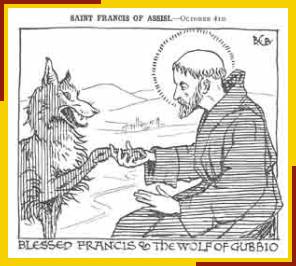
Most High, all-powerful, all-good Lord, All praise is Yours, all glory, all honour and all blessings. To you alone, Most High, do they belong, and no mortal lips are worthy to pronounce Your Name.
Praised be You my Lord with all Your creatures, especially Sir Brother Sun, Who is the day through whom You give us light. And he is beautiful and radiant with great splendour, Of You Most High, he bears the likeness.
Praised be You, my Lord, through Sister Moon and the stars, In the heavens you have made them bright, precious and fair.
Praised be You, my Lord, through Brothers Wind and Air, And fair and stormy, all weather's moods, by which You cherish all that You have made.
Praised be You my Lord through Sister Water, So useful, humble, precious and pure.
Praised be You my Lord through Brother Fire, through whom You light the night and he is beautiful and playful and robust and strong.
Praised be You my Lord through our Sister, Mother Earth who sustains and governs us, producing varied fruits with coloured flowers and herbs.
Praise be You my Lord through those who grant pardon for love of You and bear sickness and trial. Blessed are those who endure in peace, By You Most High, they will be crowned.
Praised be You, my Lord through Sister Death, from whom no-one living can escape. Woe to those who die in mortal sin! Blessed are they She finds doing Your Will. No second death can do them harm.
Praise and bless my Lord and give Him thanks, And serve Him with great humility.
Julian, like Epictetus, always calls the Christians Galilaeans because he wishes to emphasise that this was a local creed, "the creed of fishermen," and perhaps to remind his readers that "out of Galilee ariseth no prophet"; with the same intention he calls Christ "the Nazarene." His chief aim in the treatise was to show that there is no evidence in the Old Testament for the idea of Christianity, so that the Christians have no right to regard their teaching as a development of Judaism. His attitude throughout is that of a philosopher who rejects the claims of one small sect to have set up a universal religion. He speaks with respect of the God of the Hebrews, admires the Jewish discipline, their sacrifices and their prohibition of certain foods, plays off the Jews against the Christians, and reproaches the latter for having abandoned the Mosaic law; but he contrasts the jealous, exclusive "particular" Hebraic God with the universal Hellenic gods who do not confine their attentions to a small and unimportant portion of the world. Throughout Julian's works there are scattered references, nearly always disdainful, to the Galilaeans, but his formal attack on their creed and on the inconsistencies of the Scriptures, which he had promised in Letter 55, To Photinus, the heretic, was not given to the general public, for whom he says he intends it, till he had left Antioch on his march to Persia in the early spring of 363. He probably compiled it at Antioch in the preceding winter. Perhaps it was never completed, for at the time Julian had many things on his mind. It was written in three Books, but the fragments preserved are almost entirely from Book I. In the fifth century Cyril of Alexandria regarded the treatise as peculiarly dangerous, and said that it had shaken many believers. He undertook to refute it in a polemic of which about half survives, and from the quotations of Julian in Cyril's work Neumann has skilfully reconstructed considerable portions of the treatise. Cyril had rearranged Julian's hurriedly written polemic, in order to avoid repetitions and to bring similar subjects together. Moreover, he says that he omitted invectives against Christ and such matter as might contaminate the minds of Christians. We have seen that a similar mutilation of the letters occurred for similar reasons.
Julian's arguments against the Christian doctrine do not greatly differ from those used in the second century by Celsus, and by Porphyry in the third; but his tone is more like that of Celsus, for he and Celsus were alike in being embittered opponents of the Christian religion, which Porphyry was not. Those engaged in this sort of controversy use the same weapons over and over again; Origen refutes Celsus, Cyril refutes Julian, in much the same terms. Both sides have had the education of sophists, possess the learning of their time, borrow freely from Plato, attack the rules or lack of rules of diet of the opponents' party, point out the inconsistencies in the rival creed, and ignore the weaknesses of their own.
For his task Julian had been well equipped by his Christian teachers when he was interned at Macellum in Cappadocia, and he here repays them for the enforced studies of his boyhood, when his naturally pagan soul rebelled against the Christian ritual in which he had to take part. In spite of his insistence on the inconsistency of the Christians in setting up a Trinity in place of the monotheism of Moses and the prophets, he feels the need of some figure in his own pantheon to balance that of Christ the Saviour, and uses, both in this treatise and in Oration 4, about Asclepius or Dionysus or Heracles almost the language of the Christians about Christ, setting these pagan figures up one after another as manifestations of the divine beneficence in making a link between the gods and mankind.
Though Julian borrowed from Porphyry's lost polemic in fifteen Books,5 he does not discuss questions of the chronology and authorship of the Scriptures as Porphyry is known to have done. Libanius, always a blind admirer of Julian, says that in this treatise the Emperor made the doctrines of the Christians look ridiculous, and that he was "wiser than the Tyrian old man," that is, Porphyry. But apparently the Christians of the next two centuries did not agree with Cyril as to the peculiarly dangerous character of Julian's invective. At any rate, the Council of Ephesus, in a decree dated 431, sentenced Porphyry's books to be burned, but did not mention Julian's; and again in a law of Theodosius II. in 448, Julian was ignored while Porphyry was condemned. When in 529 Justinian decreed that anti-Christian books were to be burned, Porphyry alone was named, though probably Julian was meant to be included. Not long after Julian's death his fellow-student at Athens, Gregory Nazianzen, wrote a long invective against him, in which he attacked the treatise Against the Galilaeans without making a formal refutation of Julian's arguments. Others in the fifth century, such as Theodorus of Mopsuestia and Philip Sideta, wrote refutations which are lost. But it was reserved for Cyril, Bishop of Alexandria, writing between 429 and 441, to compose a long and formal refutation of Julian's treatise; the latter seems to have been no longer in circulation, or was at least neglected, and Neumann thinks that the bishop was urged to write his polemic by his dislike of the heretical views of other and earlier antagonists of Julian, especially Theodorus of Mopsuestia. This refutation, which was dedicated to the Emperor Theodosius II, was in at least twenty Books. But for Cyril's quotations we should have a very vague idea of Julian's treatise, and as it is we are compelled to see it through the eyes of a hostile apologist. Cyril's own comments, and his summaries of portions of the treatise have been omitted from the following translation. Spanheim's (1696) edition of Cyril's polemic Pro Christiana Religione, was used by Neumann to extract and string together Cyril's quotations of Julian. There is, therefore, an occasional lack of connection in Julian's arguments, taken apart from their context in Cyril's treatise.
By Wilmer Cave WRIGHT, PH.D.
. Against the Galilaeans
It is, I think, expedient to set forth to all mankind the reasons by which I was convinced that the fabrication of the Galilaeans is a fiction of men composed by wickedness.
Though it has in it nothing divine, by making full use of that part of the soul which loves fable and is childish and foolish, it has induced men to believe that the monstrous tale is truth.
Now since I intend to treat of all their first dogmas, as they call them, I wish to say in the first place that if my readers desire to try to refute me they must proceed as if they were in a court of law and not drag in irrelevant matter, or, as the saying is, bring counter-charges until they have defended their own views. For thus it will be better and clearer if, when they wish to censure any views of mine, they undertake that as a separate task, but when they are defending themselves against my censure, they bring no counter-charges.
It is worth while to recall in a few words
whence and how we first arrived at a conception of God;
next to compare what is said about the divine among the Hellenes and Hebrews; and
finally to enquire of those who are neither Hellenes nor Jews, but belong to the sect of the Galilaeans,
why they preferred the belief of the Jews to ours; and what, further, can be the reason why they do not even adhere to the Jewish beliefs but have abandoned them also and followed a way of their own.
For they have not accepted a single admirable or important doctrine of those that are held either by us Hellenes or by the Hebrews who derived them from Moses; but from both religions they have gathered what has been engrafted like powers of evil, as it were, on these nations----atheism from the Jewish levity, and a sordid and slovenly way of living from our indolence and vulgarity; and they desire that this should be called the noblest worship of the gods.
Whence and how we first arrived at a conception of God
Now that the human race possesses its knowledge of God by nature and not from teaching is proved to us first of all by the universal yearning for the divine that is in all men whether private persons or communities, whether considered as individuals or as races. For all of us, without being taught, have attained to a belief in some sort of divinity, though it is not easy for all men to know the precise truth about it, nor is it possible for those who do know it to tell it to all men. . . . Surely, besides this conception which is common to all men, there is another also. I mean that we are all by nature so closely dependent on the heavens and the gods that are visible therein, that even if any man conceives of another god besides these, he in every case assigns to him the heavens as his dwelling-place; not that he thereby separates him from the earth, but he so to speak establishes the King of the All in the heavens as in the most honourable place of all, and conceives of him as overseeing from there the affairs of this world.
What need have I to summon Hellenes and Hebrews as witnesses of this? There exists no man who does not stretch out his hands towards the heavens when he prays; and whether he swears by one god or several, if he has any notion at all of the divine, he turns heavenward. And it was very natural that men should feel thus. For since they observed that in what concerns the heavenly bodies there is no increase or diminution or mutability, and that they do not suffer any unregulated influence, but their movement is harmonious and their arrangement in concert; and that the illuminations of the moon are regulated, and that the risings and settings of the sun are regularly defined, and always at regularly defined seasons, they naturally conceived that the heaven is a god and the throne of a god. For a being of that sort, since it is not subject to increase by addition, or to diminution by subtraction, and is stationed beyond all change due to alteration and mutability, is free from decay and generation, and inasmuch as it is immortal by nature and indestructible, it is pure from every sort of stain. Eternal and ever in movement, as we see, it travels in a circuit about the great Creator, whether it be impelled by a nobler and more divine soul that dwells therein, just as, I mean, our bodies are by the soul in us, or having received its motion from God Himself, it wheels in its boundless circuit, in an unceasing and eternal career.
What is said about the divine among the Hellenes and Hebrews
Now it is true that the Hellenes invented their myths about the gods, incredible and monstrous stories. For they said that Kronos swallowed his children and then vomited them forth; and they even told of lawless unions, how Zeus had intercourse with his mother, and after having a child by her, married his own daughter, or rather did not even marry her, but simply had intercourse with her and then handed her over to another. Then too there is the legend that Dionysus was rent asunder and his limbs joined together again. This is the sort of thing described in the myths of the Hellenes. Compare with them the Jewish doctrine, how the garden was planted by God and Adam was fashioned by Him, and next, for Adam, woman came to be. For God said, "It is not good that the man should be alone. Let us make him an help meet like, him." Yet so far was she from helping him at all that she deceived him, and was in part the cause of his and her own fall from their life of ease in the garden.
This is wholly fabulous. For is it probable that God did not know that the being he was creating as a help meet would prove to be not so much a blessing as a misfortune to him who received her? Again, what sort of language are we to say that the serpent used when he talked with Eve? Was it the language of human beings? And in what do such legends as these differ from the myths that were invented by the Hellenes? Moreover, is it not excessively strange that God should deny to the human beings whom he had fashioned the power to distinguish between good and evil? What could be more foolish than a being unable to distinguish good from bad? For it is evident that he would not avoid the latter, I mean things evil, nor would he strive after the former, I mean things good. And, in short, God refused to let man taste of wisdom, than which there could be nothing of more value for man. For that the power to distinguish between good and less good is the property of wisdom is evident surely even to the witless; so that the serpent was a benefactor rather than a destroyer of the human race. Furthermore, their God must be called envious. For when he saw that man had attained to a share of wisdom, that he might not, God said, taste of the tree of life, he cast him out of the garden, saying in so many words, "Behold, Adam has become as one of us, because he knows good from bad; and now let him not put forth his hand and take also of the tree of life and eat and thus live forever." Accordingly, unless every one of these legends is a myth that involves some secret interpretation, as I indeed believe, they are filled with many blasphemous sayings about God. For in the first place to be ignorant that she who was created as a help meet would be the cause of the fall; secondly to refuse the knowledge of good and bad, which knowledge alone seems to give coherence to the mind of man; and lastly to be jealous lest man should take of the tree of life and from mortal become immortal,---- this is to be grudging and envious overmuch.
Next to consider the views that are correctly held by the Jews, and also those that our fathers handed down to us from the beginning. Our account has in it the immediate creator of this universe, as the following shows. . . Moses indeed has said nothing whatsoever about the gods who are superior to this creator, nay, he has not even ventured to say anything about the nature of the angels. But that they serve God he has asserted in many ways and often; but whether they were generated or un-generated, or whether they were generated by one god and appointed to serve another, or in some other way, he has nowhere said definitely. But he describes fully in what manner the heavens and the earth and all that therein is were set in order. In part, he says, God ordered them to be, such as light and the firmament, and in part, he says, God made them, such as the heavens and the earth, the sun and moon, and that all things which already existed but were hidden away for the time being, he separated, such as water, I mean, and dry land. But apart from these he did not venture to say a word about the generation or the making of the Spirit, but only this, "And the Spirit of God moved upon the face of the waters." But whether that spirit was ungenerated or had been generated he does not make at all clear.
Now, if you please, we will compare the utterance of Plato. Observe then what he says about the creator, and what words he makes him speak at the time of the generation of the universe, in order that we may compare Plato's account of that generation with that of Moses. For in this way it will appear who was the nobler and who was more worthy of intercourse with God, Plato who paid homage to images, or he of whom the Scripture says that God spake with him mouth to mouth. "In the beginning God created the heaven and the earth. And the earth was invisible and without form, and darkness was upon the face of the deep. And the spirit of God moved upon the face of the waters. And God said, Let there be light; and there was light. And God saw the light that it was good; and God divided the light from the darkness. And God called the light Day, and the darkness he called Night. And the evening and the morning were the first day. And God said, Let there be a firmament in the midst of the waters. And God called the firmament Heaven. And God said, Let the waters under the heaven be gathered together unto one place, and let the dry land appear; and it was so. And God said, Let the earth bring forth grass for fodder, and the fruit tree yielding fruit. And God said, Let there be lights in the firmament of the heaven that they may be for a light upon the earth. And God set them in the firmament of the heaven to rule over the day and over the night."
In all this, you observe, Moses does not say that the deep was created by God, or the darkness or the waters. And yet, after saying concerning light that God ordered it to be, and it was, surely he ought to have gone on to speak of night also, and the deep and the waters. But of them he says not a word to imply that they were not already existing at all, though he often mentions them. Furthermore, he does not mention the birth or creation of the angels or in what manner they were brought into being, but deals only with the heavenly and earthly bodies. It follows that, according to Moses, God is the creator of nothing that is incorporeal, but is only the disposer of matter that already existed. For the words, "And the earth was invisible and without form" can only mean that he regards the wet and dry substance as the original matter and that he introduces God as the disposer of this matter.
Now on the other hand hear what Plato says about the universe :
"Now the whole heaven or the universe,----or whatever other name would be most acceptable to it, so let it be named by us,----did it exist eternally, having no beginning of generation, or has it come into being starting from some beginning? It has come into being. For it can be seen and handled and has a body; and all such things are the objects of sensation, and such objects of sensation, being apprehensible by opinion with the aid of sensation are things that came into being, as we saw, and have been generated. . .It follows, therefore, according to the reasonable theory, that we ought to affirm that this universe came into being as a living creature possessing soul and intelligence in very truth, both by the providence of God."
Comparison between what is said about the divine among the Hellenes and Hebrews
Let us but compare them, point by point. What and what sort of speech does the god make in the account of Moses, and what the god in the account of Plato?
"And God said, Let us make man in our image, and our likeness; and let them have dominion over the fish of the sea, and over the fowl of the air, and over the cattle, and over all the earth, and over every creeping thing that creepeth upon the earth. So God created man, in the image of God created he him; male and female created he them, and said, Be fruitful and multiply and replenish the earth, and subdue it; and have dominion over the fish of the sea, and over the fowl of the air, and over all the cattle and over all the earth."
Now, I say, hear also the speech which Plato puts in the mouth of the Artificer of the All.
"Gods of Gods! Those works whose artificer and father I am will abide indissoluble, so long as it is my will. Lo, all that hath been fastened may be loosed, yet to will to loose that which is harmonious and in good case were the act of an evil being. Wherefore, since ye have come into being, ye are not immortal or indissoluble altogether, nevertheless ye shall by no means be loosed or meet with the doom of death, since ye have found in my will a bond more mighty and more potent than those wherewith ye were bound when ye came into being. Now therefore hearken to the saying which I proclaim unto you : Three kinds of mortal beings still remain unborn, and unless these have birth the heaven will be incomplete. For it will not have within itself all the kinds of living things. Yet if these should come into being and receive a share of life at my hands they would become equal to gods. Therefore in order that they may be mortal, and that this All may be All in very truth, turn ye according to your nature to the contriving of living things, imitating my power even as I showed it in generating you. And such part of them as is fitted to receive the same name as the immortals, which is called divine and the power in them that governs all who are willing ever to follow justice and you, this part I, having sowed it and originated the same, will deliver to you. For the rest, do you, weaving the mortal with the immortal, contrive living beings and bring them to birth; then by giving them sustenance increase them, and when they perish receive them back again."
But since ye are about to consider whether this is only a dream, do ye learn the meaning thereof. Plato gives the name gods to those that are visible, the sun and moon, the stars and the heavens, but these are only the likenesses of the invisible gods. The sun which is visible to our eyes is the likeness of the intelligible and invisible sun, and again the moon which is visible to our eyes and every one of the stars are likenesses of the intelligible. Accordingly Plato knows of those intelligible and invisible gods which are immanent in and coexist with the creator himself and were begotten and proceeded from him. Naturally, therefore, the creator in Plato's account says "gods" when he is addressing the invisible beings, and "of gods," meaning by this, evidently, the visible gods. And the common creator of both these is he who fashioned the heavens and the earth and the sea and the stars, and begat in the intelligible world the archetypes of these.Observe then that what follows is well said also. "For," he says, "there remain three kinds of mortal things," meaning, evidently, human beings, animals and plants; for each one of these has been denned by its own peculiar definition. "Now," he goes on to say, "if each one of these also should come to exist by me, it would of necessity become immortal." And indeed, in the case of the intelligible gods and the visible universe, no other cause for their immortality exists than that they came into existence by the act of the creator. When, therefore, he says, "Such part of them as is immortal must needs be given to these by the creator," he means the reasoning soul. "For the rest," he says, "do ye weave mortal with immortal." It is therefore clear that the creative gods received from their father their creative power and so begat on earth all living things that are mortal. For if there were to be no difference between the heavens and mankind and animals too, by Zeus, and all the way down to the very tribe of creeping things and the little fish that swim in the sea, then there would have had to be one and the same creator for them all. But if there is a great gulf fixed between immortals and mortals, and this cannot become greater by addition or less by subtraction, nor can it be mixed with what is mortal and subject to fate, it follows that one set of gods were the creative cause of mortals, and another of immortals.
Accordingly, since Moses, as it seems, has failed also to give a complete account of the immediate creator of this universe, let us go on and set one against another the opinion of the Hebrews and that of our fathers about these nations.
Moses says that the creator of the universe chose out the Hebrew nation, that to that nation alone did he pay heed and cared for it, and he gives him charge of it alone. But how and by what sort of gods the other nations are governed he has said not a word,----unless indeed one should concede that he did assign to them the sun and moon. However of this I shall speak a little later. Now I will only point out that Moses himself and the prophets who came after him and Jesus the Nazarene, yes and Paul also, who surpassed all the magicians and charlatans of every place and every time, assert that he is the God of Israel alone and of Judaea, and that the Jews are his chosen people. Listen to their own words, and first to the words of Moses: "And thou shalt say unto Pharaoh, Israel is my son, my firstborn. And I have said to thee, Let my people go that they may serve me. But thou didst refuse to let them go." And a little later, "And they say unto him, The God of the Hebrews hath summoned us; we will go therefore three days' journey into the desert, that we may sacrifice unto the Lord our God." And soon he speaks again in the same way, "The Lord the God of the Hebrews hath sent me unto thee, saying, Let my people go that they may serve me in the wilderness."
But that from the beginning God cared only for the Jews and that He chose them out as his portion, has been clearly asserted not only by Moses and Jesus but by Paul as well; though in Paul's case this is strange. For according to circumstances he keeps changing his views about God, as the polypus changes its colours to match the rocks, and now he insists that the Jews alone are God's portion, and then again, when he is trying to persuade the Hellenes to take sides with him, he says : "Do not think that he is the God of Jews only, but also of Gentiles : yea of Gentiles also." Therefore it is fair to ask of Paul why God, if he was not the God of the Jews only but also of the Gentiles, sent the blessed gift of prophecy to the Jews in abundance and gave them Moses and the oil of anointing, and the prophets and the law and the incredible and monstrous elements in their myths? For you hear them crying aloud: "Man did eat angels' food." And finally God sent unto them Jesus also, but unto us no prophet, no oil of anointing, no teacher, no herald to announce his love for man which should one day, though late, reach even unto us also. Nay he even looked on for myriads, or if you prefer, for thousands of years, while men in extreme ignorance served idols, as you call them, from where the sun rises to where he sets, yes and from North to South, save only that little tribe which less than two thousand years before had settled in one part of Palestine. For if he is the God of all of us alike, and the creator of all, why did he neglect us? Wherefore it is natural to think that the God of the Hebrews was not the begetter of the whole universe with lordship over the Avhole, but rather, as I said before, that he is confined within limits, and that since his empire has bounds we must conceive of him as only one of the crowd of other gods. Then are we to pay further heed to you because you or one of your stock imagined the God of the universe, though in any case you attained only to a bare conception of Him? Is not all this partiality? God, you say, is a jealous God. But why is he so jealous, even avenging the sins of the fathers on the children?
But now consider our teaching in comparison with this of yours. Our writers say that the creator is the common father and king of all things, but that the other functions have been assigned by him to national gods of the peoples and gods that protect the cities; every one of whom administers his own department in accordance with his own nature. For since in the father all things are complete and all things are one, while in the separate deities one quality or another predominates, therefore Ares rules over the warlike nations, Athene over those that are wise as well as warlike, Hermes over those that are more shrewd than adventurous; and in short the nations over which the gods preside follow each the essential character of their proper god. Now if experience does not bear witness to the truth of our teachings, let us grant that our traditions are a figment and a misplaced attempt to convince, and then we ought to approve the doctrines held by you. If, however, quite the contrary is true, and from the remotest past experience bears witness to our account and in no case does anything appear to harmonise with your teachings, why do you persist in maintaining a pretension so enormous?
Come, tell me why it is that the Celts and the Germans are fierce, while the Hellenes and Romans are, generally speaking, inclined to political life and humane, though at the same time unyielding and warlike? Why the Egyptians are more intelligent and more given to crafts, and the Syrians unwarlike and effeminate, but at the same time intelligent, hot-tempered, vain and quick to learn? For if there is anyone who does not discern a reason for these differences among the nations, but rather declaims that all this so befell spontaneously, how, I ask, can he still believe that the universe is administered by a providence? But if there is any man who maintains that there are reasons for these differences, let him tell me them, in the name of the creator himself, and instruct me. As for men's laws, it is evident that men have established them to correspond with their own natural dispositions; that is to say, constitutional and humane laws were established by those in whom a humane disposition had been fostered above all else, savage and inhuman laws by those in whom there lurked and was inherent the contrary disposition. For lawgivers have succeeded in adding but little by their discipline to the natural characters and aptitudes of men. Accordingly the Scythians would not receive Anacharsis among them when he was inspired by a religious frenzy, and with very few exceptions you will not find that any men of the Western nations have any great inclination for philosophy or geometry or studies of that sort, although the Roman Empire has now so long been paramount. But those who are unusually talented delight only in debate and the art of rhetoric, and do not adopt any other study; so strong, it seems, is the force of nature. Whence then come these differences of character and laws among the nations? Now of the dissimilarity of language Moses has given a wholly fabulous explanation. For he said that the sons of men came together intending to build a city, and a great tower therein, but that God said that he must go down and confound their languages. And that no one may think I am falsely accusing him of this, I will read from the book of Moses what follows: "And they said, Go to, let us build us a city and a tower, whose top may reach unto heaven; and let us make us a name, before we be scattered abroad upon the face of the whole earth. And the Lord came down to see the city and the tower, which the children of men had builded. And the Lord said, Behold, the people is one, and they have all one language; and this they have begun to do; and now nothing will be withholden from them which they purpose to do. Go to, let us go down, and there confound their language, that no man may understand the speech of his neighbour. So the Lord God scattered them abroad upon the face of all the earth : and they left off to build the city and the tower." And then you demand that we should believe this account, while you yourselves disbelieve Homer's narrative of the Aloadae, namely that they planned to set three mountains one on another, "that so the heavens might be scaled." For my part I say that this tale is almost as fabulous as the other. But if you accept the former, why in the name of the gods do you discredit Homer's fable? For I suppose that to men so ignorant as you I must say nothing about the fact that, even if all men throughout the inhabited world ever employ one speech and one language, they will not be able to build a tower that will reach to the heavens, even though they should turn the whole earth into bricks. For such a tower will need countless bricks each one as large as the whole earth, if they are to succeed in reaching to the orbit of the moon. For let us assume that all mankind met together, employing but one language and speech, and that they made the whole earth into bricks and hewed out stones, when would it reach as high as the heavens, even though they spun it out and stretched it till it was finer than a thread? Then do you, who believe that this so obvious fable is true, and moreover think that God was afraid of the brutal violence of men, and for this reason came down to earth to confound their languages, do you, I say, still venture to boast of your knowledge of God?
But I will go back again to the question how God confounded their languages. The reason why he did so Moses has declared: namely, that God was afraid that if they should have one language and were of one mind, they would first construct for themselves a path to the heavens and then do some mischief against him. But how he carried this out Moses does not say at all, but only that he first came down from heaven,----because he could not, as it seems, do it from on high, without coming down to earth. But with respect to the existing differences in characters and customs, neither Moses nor anyone else has enlightened us. And yet among mankind the difference between the customs and the political constitutions of the nations is in every way greater than the difference in their language. What Hellene, for instance, ever tells us that a man ought to marry his sister or his daughter or his mother? Yet in Persia this is accounted virtuous. But why need I go over their several characteristics, or describe the love of liberty and lack of discipline of the Germans, the docility and tameness of the Syrians, the Persians, the Parthians, and in short of all the barbarians in the East and the South, and of all nations who possess and are contented with a somewhat despotic form of government? Now if these differences that are greater and more important came about without the aid of a greater and more divine providence, why do we vainly trouble ourselves about and worship one who takes no thought for us? For is it fitting that he who cared nothing for our lives, our characters, our manners, our good government, our political constitution, should still claim to receive honour at our hands? Certainly not. You see to what an absurdity your doctrine comes. For of all the blessings that we behold in the life of man, those that relate to the soul come first, and those that relate to the body are secondary. If, therefore, he paid no heed to our spiritual blessings, neither took thought for our physical conditions, and moreover, did not send to us teachers or lawgivers as he did for the Hebrews, such as Moses and the prophets who followed him, for what shall we properly feel gratitude to him?
But consider whether God has not given to us also gods and kindly guardians of whom you have no knowledge, gods in no way inferior to him who from the beginning has been held in honour among the Hebrews of Judaea, the only land that he chose to take thought for, as Moses declared and those who came after him, down to our own time. But even if he who is honoured among the Hebrews really was the immediate creator of the universe, our beliefs about him are higher than theirs, and he has bestowed on us greater blessings than on them, with respect both to the soul and to externals. Of these, however, I shall speak a little later. Moreover, he sent to us also lawgivers not inferior to Moses, if indeed many of them were not far superior.
Therefore, as I said, unless for every nation separately some presiding national god (and under him an angel, a demon, a hero, and a peculiar order of spirits which obey and work for the higher powers) established the differences in our laws and characters, you must demonstrate to me how these differences arose by some other agency. Moreover, it is not sufficient to say, "God spake and it was so." For the natures of things that are created ought to harmonise with the commands of God. I will say more clearly what I mean. Did God ordain that fire should mount upwards by chance and earth sink down? Was it not necessary, in order that the ordinance of God should be fulfilled, for the former to be light and the latter to weigh heavy? And in the case of other things also this is equally true. . . . 34 Likewise with respect to things divine. But the reason is that the race of men is doomed to death and perishable. Therefore men's works also are naturally perishable and mutable and subject to every kind of alteration. But since God is eternal, it follows that of such sort are his ordinances also. And since they are such, they are either the natures of things or are accordant with the nature of things. For how could nature be at variance with the ordinance of God? How could it fall out of harmony therewith? Therefore, if he did ordain that even as our languages are confounded and do not harmonise with one another, so too should it be with the political constitutions of the nations, then it was not by a special, isolated decree that he gave these constitutions their essential characteristics, or framed us also to match this lack of agreement. For different natures must first have existed in all those things that among the nations were to be differentiated. This at any rate is seen if one observes how very different in their bodies are the Germans and Scythians from the Libyans and Ethiopians. Can this also be due to a bare decree, and does not the climate or the country have a joint influence with the gods in determining what sort of complexion they have?
Furthermore, Moses also consciously drew a veil over this sort of enquiry, and did not assign the confusion of dialects to God alone. For he says that God did not descend alone, but that there descended with him not one but several, and he did not say who these were. But it is evident that he assumed that the beings who descended with God resembled him. If, therefore, it was not the Lord alone but his associates with him who descended for the purpose of confounding the dialects, it is very evident that for the confusion of men's characters, also, not the Lord alone but also those who together with him confounded the dialects would reasonably be considered responsible for this division.
Now why have I discussed this matter at such length, though it was my intention to speak briefly? For this reason: If the immediate creator of the universe be he who is proclaimed by Moses, then we hold nobler beliefs concerning him, inasmuch as we consider him to be the master of all things in general, but that there are besides national gods who are subordinate to him and are like viceroys of a king, each administering separately his own province; and, moreover, we do not make him the sectional rival of the gods whose station is subordinate to his. But if Moses first pays honour to a sectional god, and then makes the lordship of the whole universe contrast with his power, then it is better to believe as we do, and to recognise the God of the All, though not without apprehending also the God of Moses; this is better, I say, than to honour one who has been assigned the lordship over a very small portion, instead of the creator of all things.
That is a surprising law of Moses, I mean the famous decalogue! "Thou shalt not steal." "Thou shalt not kill." "Thou shalt not bear false witness." But let me write out word for word every one of the commandments which he says were written by God himself.
"I am the Lord thy God, which have brought thee out of the land of Egypt." Then follows the second: "Thou shalt have no other gods but me." "Thou shalt not make unto thee any graven image." And then he adds the reason : " For I the Lord thy God am a jealous God, visiting the iniquity of the fathers upon the children unto the third generation." "Thou shalt not take the name of the Lord thy God in vain." "Remember the sabbath day." "Honour thy father and thy mother." " Thou shalt not commit adultery." "Thou shalt not kill." "Thou shalt not steal." "Thou shalt not bear false witness." "Thou shalt not covet anything that is thy neighbour's."
Now except for the command "Thou shalt not worship other gods," and "Remember the sabbath day," what nation is there, I ask in the name of the gods, which does not think that it ought to keep the other commandments? So much so that penalties have been ordained against those who transgress them, sometimes more severe, and sometimes similar to those enacted by Moses, though they are sometimes more humane.
But as for the commandment "Thou shalt not worship other gods," to this surely he adds a terrible libel upon God. "For I am a jealous God," he says, and in another place again, "Our God is a consuming fire." Then if a man is jealous and envious you think him blameworthy, whereas if God is called jealous you think it a divine quality? And yet how is it reasonable to speak falsely of God in a matter that is so evident? For if he is indeed jealous, then against his will are all other gods worshipped, and against his will do all the remaining nations worship their gods. Then how is it that he did not himself restrain them, if he is so jealous and does not wish that the others should be worshipped, but only himself? Can it be that he was not able to do so, or did he not wish even from the beginning to prevent the other gods also from being worshipped? However, the first explanation is impious, to say, I mean, that he was unable; and the second is in accordance with what we do ourselves. Lay aside this nonsense and do not draw down on yourselves such terrible blasphemy. For if it is God's will that none other should be worshipped, why do you worship this spurious son of his whom he has never yet recognised or considered as his own? This I shall easily prove. You, however, I know not why, foist on him a counterfeit son. . .
Nowhere is God shown as angry, or resentful, or wroth, or taking an oath, or inclining first to this side, then suddenly to that, or as turned from his purpose, as Moses tells us happened in the case of Phinehas. If any of you has read the Book of Numbers he knows what I mean. For when Phinehas had seized with his own hand and slain the man who had dedicated himself to Baal-peor, and with him the woman who had persuaded him, striking her with a shameful and most painful wound through the belly, as Moses tells us, then God is made to say : "Phinehas, the son of Eleazar, the son of Aaron the priest, hath turned my wrath away from the children of Israel, in that he was jealous with my jealousy among them; and I consumed not the children of Israel in my jealousy.'' What could be more trivial than the reason for which God was falsely represented as angry by the writer of this passage? What could be more irrational, even if ten or fifteen persons, or even, let us suppose, a hundred, for they certainly will not say that there were a thousand,----however, let us assume that even as many persons as that ventured to transgress some one of the laws laid down by God; was it right that on account of this one thousand, six hundred thousand should be utterly destroyed? For my part I think it would be better in every way to preserve one bad man along with a thousand virtuous men than to destroy the thousand together with that one. . .
For if the anger of even one hero or unimportant demon is hard to bear for whole countries and cities, who could have endured the wrath of so mighty a God, whether it were directed against demons or angels or mankind? It is worth while to compare his behaviour with the mildness of Lycurgus and the forbearance of Solon, or the kindness and benevolence of the Romans towards transgressors. But observe also from what follows how far superior are our teachings to theirs. The philosophers bid us imitate the gods so far as we can, and they teach us that this imitation consists in the contemplation of realities. And that this sort of study is remote from passion and is indeed based on freedom from passion, is, I suppose, evident, even without my saying it. In proportion then as we, having been assigned to the contemplation of realities, attain to freedom from passion, in so far do we become like God. But what sort of imitation of God is praised among the Hebrews? Anger and wrath and fierce jealousy. For God says : "Phinehas hath turned away my wrath from the children of Israel, in that he was jealous with my jealousy among them." For God, on finding one who shared his resentment and his grief, thereupon, as it appears, laid aside his resentment. These words and others like them about God Moses is frequently made to utter in the Scripture.
Furthermore observe from what follows that God did not take thought for the Hebrews alone, but though he cared for all nations, he bestowed on the Hebrews nothing considerable or of great value, whereas on us he bestowed gifts far higher and surpassing theirs. For instance the Egyptians, as they reckon up the names of not a few wise men among themselves, can boast that they possess many successors of Hermes, I mean of Hermes who in his third manifestation visited Egypt; while the Chaldaeans and Assyrians can boast of the successors of Oannes and Belos; the Hellenes can boast of countless successors of Cheiron. For thenceforth all Hellenes were born with an aptitude for the mysteries and theologians, in the very way, you observe, which the Hebrews claim as their own peculiar boast. . .
But has God granted to you to originate any science or any philosophical study? Why, what is it? For the theory of the heavenly bodies was perfected among the Hellenes, after the first observations had been made among the barbarians in Babylon. And the study of geometry took its rise in the measurement of the land in Egypt, and from this grew to its present importance. Arithmetic began with the Phoenician merchants, and among the Hellenes in course of time acquired the aspect of a regular science. These three the Hellenes combined with music into one science, for they connected astronomy with geometry and adapted arithmetic to both, and perceived the principle of harmony in it. Hence they laid down the rules for their music, since they had discovered for the laws of harmony with reference to the sense of hearing an agreement that was infallible, or something very near to it.
Need I tell over their names man by man, or under their professions? I mean, either the individual men, as for instance Plato, Socrates, Aristeides, Cimon, Thales, Lycurgus, Agesilaus, Archidamus,----or should I rather speak of the class of philosophers, of generals, of artificers, of lawgivers? For it will be found that even the most wicked and most brutal of the generals behaved more mildly to the greatest offenders than Moses did to those who had done no wrong. And now of what monarchy shall I report to you? Shall it be that of Perseus, or Aeacus, or Minos of Crete, who purified the sea of pirates, and expelled and drove out the barbarians as far as Syria and Sicily, advancing in both directions the frontiers of his realm, and ruled not only over the islands but also over the dwellers along the coasts? And dividing with his brother Rhadamanthus, not indeed the earth, but the care of mankind, he himself laid down the laws as he received them from Zeus, but left to Rhadamanthus to fill the part of judge. . .
But when after her foundation many wars encompassed her, she won and prevailed in them all; and since she ever increased in size in proportion to her very dangers and needed greater security, then Zeus set over her the great philosopher Numa. This then was the excellent and upright Numa who dwelt in deserted groves and ever communed with the gods in the pure thoughts of his own heart. . . . It was he who established most of the laws concerning temple worship. Now these blessings, derived from a divine possession and inspiration which proceeded both from the Sibyl and others who at that time uttered oracles in their native tongue, were manifestly bestowed on the city by Zeus. And the shield which fell from the clouds and the head which appeared on the hill, from which, I suppose, the seat of mighty Zeus received its name, are we to reckon these among the very highest or among secondary gifts? And yet, ye misguided men, though there is preserved among us that weapon which flew down from heaven, which mighty Zeus or father Ares sent down to give us a warrant, not in word but in deed, that he will forever hold his shield before our city, you have ceased to adore and reverence it, but you adore the wood of the cross and draw its likeness on your foreheads and engrave it on your housefronts.
Would not any man be justified in detesting the more intelligent among you, or pitying the more foolish, who, by following you, have sunk to such depths of ruin that they have abandoned the ever-living gods and have gone over to the corpse of the Jew. . . . For I say nothing about the Mysteries of the Mother of the Gods, and I admire Marius. . . . For the spirit that comes to men from the gods is present but seldom and in few, and it is not easy for every man to share in it or at every time. Thus it is that the prophetic spirit has ceased among the Hebrews also, nor is it maintained among the Egyptians, either, down to the present. And we see that the indigenous oracles of Greece have also fallen silent and yielded to the course of time. Then lo, our gracious lord and father Zeus took thought of this, and that we might not be wholly deprived of communion with the gods has granted us through the sacred arts a means of enquiry by which we may obtain the aid that suffices for our needs.
Asclepius: the Greatest Gift of the Helenes
I had almost forgotten the greatest of the gifts of Helios and Zeus. But naturally I kept it for the last. And indeed it is not peculiar to us Romans only, but we share it, I think, with the Hellenes our kinsmen. I mean to say that Zeus engendered Asclepius from himself among the intelligible gods, and through the life of generative Helios he revealed him to the earth. Asclepius, having made his visitation to earth from the sky, appeared at Epidaurus singly, in the shape of a man; but afterwards he multiplied himself, and by his visitations stretched out over the whole earth his saving right hand. He came to Pergamon, to Ionia, to Tarentum afterwards; and later he came to Rome. And he travelled to Cos and thence to Aegae. Next he is present everywhere on land and sea. He visits no one of us separately, and yet he raises up souls that are sinful and bodies that are sick.
But what great gift of this sort do the Hebrews boast of as bestowed on them by God, the Hebrews who have persuaded you to desert to them? If you had at any rate paid heed to their teachings, you would not have fared altogether ill, and though worse than you did before, when you were with us, still your condition would have been bearable and supportable. For you would be worshipping one god instead of many, not a man, or rather many wretched men. And though you would be following a law that is harsh and stern and contains much that is savage and barbarous, instead of our mild and humane laws, and would in other respects be inferior to us, yet you would be more holy and purer than now in your forms of worship. But now it has come to pass that like leeches you have sucked the worst blood from that source and left the purer. Yet Jesus, who won over the least worthy of you, has been known by name for but little more than three hundred years: and during his lifetime he accomplished nothing worth hearing of, unless anyone thinks that to heal crooked and blind men and to exorcise those who were possessed by evil demons in the villages of Bethsaida and Bethany can be classed as a mighty achievement. As for purity of life you do not know whether he so much as mentioned it; but you emulate the rages and the bitterness of the Jews, overturning temples and altars, and you slaughtered not only those of us who remained true to the teachings of their fathers, but also men who were as much astray as yourselves, heretics, because they did not wail over the corpse in the same fashion as yourselves. But these are rather your own doings; for nowhere did either Jesus or Paul hand down to you such commands. The reason for this is that they never even hoped that you would one day attain to such power as you have; for they were content if they could delude maidservants and slaves, and through them the women, and men like Cornelius and Sergius. But if you can show me that one of these men is mentioned by the well-known writers of that time,----these events happened in the reign of Tiberius or Claudius,----then you may consider that I speak falsely about all matters.
Why do the Galilaeans prefer the belief of the Jews to ours
But I know not whence I was as it were inspired to utter these remarks. However, to return to the point at which I digressed, when I asked, "Why were you so ungrateful to our gods as to desert them for the Jews?" Was it because the gods granted the sovereign power to Rome, permitting the Jews to be free for a short time only, and then forever to be enslaved and aliens? Look at Abraham : was he not an alien in a strange land? And Jacob : was he not a slave, first in Syria, then after that in Palestine, and in his old age in Egypt? Does not Moses say that he led them forth from the house of bondage out of Egypt "with a stretched out arm"? And after their sojourn in Palestine did they not change their fortunes more frequently than observers say the chameleon changes its colour, now subject to the judges, now enslaved to foreign races? And when they began to be governed by kings,----but let me for the present postpone asking how they were governed: for as the Scripture tells us, God did not willingly allow them to have kings, but only when constrained by them, and after protesting to them beforehand that they would thus be governed ill,----still they did at any rate inhabit their own country and tilled it for a little over three hundred years. After that they were enslaved first to the Assyrians, then to the Medes, later to the Persians, and now at last to ourselves. Even Jesus, who was proclaimed among you, was one of Caesar's subjects. And if you do not believe me I will prove it a little later, or rather let me simply assert it now. However, you admit that with his father and mother he registered his name in the governorship of Cyrenius.
But when he became man what benefits did he confer on his own kinsfolk? Nay, the Galilaeans answer, they refused to hearken unto Jesus. What? How was it then that this hardhearted and stubborn-necked people hearkened unto Moses; but Jesus, who commanded the spirits and walked on the sea, and drove out demons, and as you yourselves assert made the heavens and the earth,----for no one of his disciples ventured to say this concerning him, save only John, and he did not say it clearly or distinctly; still let us at any rate admit that he said it----could not this Jesus change the dispositions of his own friends and kinsfolk to the end that he might save them?
Hebrew Generals
However, I will consider this again a little later when I begin to examine particularly into the miracle-working and the fabrication of the gospels. But now answer me this. Is it better to be free continuously and during two thousand whole years to rule over the greater part of the earth and the sea, or to be enslaved and to live in obedience to the will of others? No man is so lacking in self-respect as to choose the latter by preference. Again, will anyone think that victory in war is less desirable than defeat? Who is so stupid? But if this that I assert is the truth, point out to me among the Hebrews a single general like Alexander or Caesar! You have no such man. And indeed, by the gods, I am well aware that I am insulting these heroes by the question, but I mentioned them because they are well known. For the generals who are inferior to them are unknown to the multitude, and yet every one of them deserves more admiration than all the generals put together whom the Jews have had.
Further, as regards the constitution of the state and the fashion of the law-courts, the administration of cities and the excellence of the laws, progress in learning and the cultivation of the liberal arts, were not all these things in a miserable and barbarous state among the Hebrews? And yet the wretched Eusebius will have it that poems in hexameters are to be found even among them, and sets up a claim that the study of logic exists among the Hebrews, since he has heard among the Hellenes the word they use for logic. What kind of healing art has ever appeared among the Hebrews, like that of Hippocrates among the Hellenes, and of certain other schools that came after him? Is their "wisest" man Solomon at all comparable with Phocylides or Theognis or Isocrates among the Hellenes? Certainly not. At least, if one were to compare the exhortations of Isocrates with Solomon's proverbs, you would, I am very sure, find that the son of Theodoras is superior to their "wisest" king. "But," they answer, "Solomon was also proficient in the secret cult of God." What then? Did not this Solomon serve our gods also, deluded by his wife, as they assert? What great virtue! What wealth of wisdom! He could not rise superior to pleasure, and the arguments of a woman led him astray! Then if he was deluded by a woman, do not call this man wise. But if you are convinced that he was wise, do not believe that he was deluded by a woman, but that, trusting to his own judgement and intelligence and the teaching that he received from the God who had been revealed to him, he served the other gods also. For envy and jealousy do not come even near the most virtuous men, much more are they remote from angels and gods. But you concern yourselves with incomplete and partial powers, which if anyone call daemonic he does not err. For in them are pride and vanity, but in the gods there is nothing of the sort.
If the reading of your own scriptures is sufficient for you, why do you nibble at the learning of the Hellenes? And yet it were better to keep men away from that learning than from the eating of sacrificial meat. For by that, as even Paul says,he who eats thereof is not harmed, but the conscience of the brother who sees him might be offended according to you, O most wise and arrogant men! But this learning of ours has caused every noble being that nature has produced among you to abandon impiety. Accordingly everyone who possessed even a small fraction of innate virtue has speedily abandoned your impiety. It were therefore better for you to keep men from learning rather than from sacrificial meats. But you yourselves know, it seems to me, the very different effect on the intelligence of your writings as compared with ours; and that from studying yours no man could attain to excellence or even to ordinary goodness, whereas from studying ours every man would become better than before, even though he were altogether without natural fitness. But when a man is naturally well endowed, and moreover receives the education of our literature, he becomes actually a gift of the gods to mankind, either by kindling the light of knowledge, or by founding some kind of political constitution, or by routing numbers of his country's foes, or even by travelling far over the earth and far by sea, and thus proving himself a man of heroic mould. . .
Now this would be a clear proof: Choose out children from among you all and train and educate them in your scriptures, and if when they come to manhood they prove to have nobler qualities than slaves, then you may believe that I am talking nonsense and am suffering from spleen. Yet you are so misguided and foolish that you regard those chronicles of yours as divinely inspired, though by their help no man could ever become wiser or braver or better than he was before; while, on the other hand, writings by whose aid men can acquire courage, wisdom and justice, these you ascribe to Satan and to those who serve Satan!
Asclepius heals our bodies, and the Muses with the aid of Asclepius and Apollo and Hermes, the god of eloquence, train our souls; Ares fights for us in war and Enyo also; Hephaistus apportions and administers the crafts, and Athene the Motherless Maiden with the aid of Zeus presides over them all. Consider therefore whether we are not superior to you in every single one of these things, I mean in the arts and in wisdom and intelligence; and this is true, whether you consider the useful arts or the imitative arts whose end is beauty, such as the statuary's art, painting, or household management, and the art of healing derived from Asclepius whose oracles are found everywhere on earth, and the god grants to us a share in them perpetually. At any rate, when I have been sick, Asclepius has often cured me by prescribing remedies; and of this Zeus is witness. Therefore, if we who have not given ourselves over to the spirit of apostasy, fare better than you in soul and body and external affairs, why do you abandon these teachings of ours and go over to those others?
And why is it that you do not abide even by the traditions of the Hebrews or accept the law which God has given to them? Nay, you have forsaken their teaching even more than ours, abandoning the religion of your forefathers and giving yourselves over to the predictions of the prophets? For if any man should wish to examine into the truth concerning you, he will find that your impiety is compounded of the rashness of the Jews and the indifference and vulgarity of the Gentiles. For from both sides you have drawn what is by no means their best but their inferior teaching, and so have made for yourselves a border of wickedness. For the Hebrews have precise laws concerning religious worship, and countless sacred things and observances which demand the priestly life and profession. But though their lawgiver forbade them to serve all the gods save only that one, whose "portion is Jacob, and Israel an allotment of his inheritance "; though he did not say this only, but methinks added also "Thou shalt not revile the gods"; yet the shamelessness and audacity of later generations, desiring to root out all reverence from the mass of the people, has thought that blasphemy accompanies the neglect of worship. This, in fact, is the only thing that you have drawn from this source; for in all other respects you and the Jews have nothing in common. Nay, it is from the new-fangled teaching of the Hebrews that you have seized upon this blasphemy of the gods who are honoured among us; but the reverence for every higher nature, characteristic of our religious worship, combined with the love of the traditions of our forefathers, you have cast off, and have acquired only the habit of eating all things, "even as the green herb." But to tell the truth, you have taken pride in outdoing our vulgarity, (this, I think, is a thing that happens to all nations, and very naturally) and you thought that you must adapt your ways to the lives of the baser sort, shopkeepers, tax-gatherers, dancers and libertines.
But that not only the Galilaeans of our day but also those of the earliest time, those who were the first to receive the teaching from Paul, were men of this sort, is evident from the testimony of Paul himself in a letter addressed to them. For unless he actually knew that they had committed all these disgraceful acts, he was not, I think, so impudent as to write to those men themselves concerning their conduct, in language for which, even though in the same letter he included as many eulogies of them, he ought to have blushed, yes, even if those eulogies were deserved, while if they were false and fabricated, then he ought to have sunk into the ground to escape seeming to behave with wanton flattery and slavish adulation. But the following are the very words that Paul wrote concerning those who had heard his teaching, and were addressed to the men themselves : "Be not deceived : neither idolaters, nor adulterers, nor effeminate, nor abusers of themselves with men, nor thieves, nor covetous, nor drunkards, nor revilers, nor extortioners, shall inherit the kingdom of God. And of this ye are not ignorant, brethren, that such were you also; but ye washed yourselves, but ye were sanctified in the name of Jesus Christ." Do you see that he says that these men too had been of such sort, but that they "had been sanctified" and "had been washed," water being able to cleanse and winning power to purify when it shall go down into the soul? And baptism does not take away his leprosy from the leper, or scabs, or pimples, or warts, or gout, or dysentery, or dropsy, or a whitlow, in fact no disorder of the body, great or small, then shall it do away with adultery and theft and in short all the transgressions of the soul? . . .
Now since the Galilaeans say that, though they are different from the Jews, they are still, precisely speaking, Israelites in accordance with their prophets, and that they obey Moses above all and the prophets who in Judaea succeeded him, let us see in what respect they chiefly agree with those prophets. And let us begin with the teaching of Moses, who himself also, as they claim, foretold the birth of Jesus that was to be. Moses, then, not once or twice or thrice but very many times says that men ought to honour one God only, and in fact names him the Highest; but that they ought to honour any other god he nowhere says. He speaks of angels and lords and moreover of several gods, but from these he chooses out the first and does not assume any god as second, either like or unlike him, such as you have invented. And if among you perchance you possess a single utterance of Moses with respect to this, you are bound to produce it. For the words "A prophet shall the Lord your God raise up unto you of your brethren, like unto me; to him shall ye hearken," were certainly not said of the son of Mary. And even though, to please you, one should concede that they were said of him, Moses says that the prophet will be like him and not like God, a prophet like himself and bom of men, not of a god. And the words " The sceptre shall not depart from Judah, nor a leader from his loins," were most certainly not said of the son of Mary, but of the royal house of David, which, you observe, came to an end with King Zedekiah. And certainly the Scripture can be interpreted in two ways when it says "until there comes what is reserved for him "; but you have wrongly interpreted it "until he comes for whom it is reserved." 90 But it is very clear that not one of these sayings relates to Jesus; for he is not even from Judah. How could he be when according to you he was not born of Joseph but of the Holy Spirit? For though in your genealogies you trace Joseph back to Judah, you could not invent even this plausibly. For Matthew and Luke are refuted by the fact that they disagree concerning his genealogy. However, as I intend to examine closely into the truth of this matter in my Second Book, I leave it till then. But granted that he really is "a sceptre from Judah," then he is not "God born of God," as you are in the habit of saying, nor is it true that "All things were made by him; and without him was not any thing made." But, say you, we are told in the Book of Numbers also : "There shall arise a star out of Jacob, and a man out of Israel." It is certainly clear that this relates to David and to his descendants; for David was a son of Jesse.
If therefore you try to prove anything from these writings, show me a single saying that you have drawn from that source whence I have drawn very many. But that Moses believed in one God, the God of Israel, he says in Deuteronomy: "So that thou mightest know that the Lord thy God he is one God; and there is none else beside him." And moreover he says besides, "And lay it to thine heart that this the Lord thy God is God in the heaven above and upon the earth beneath, and there is none else." And again, "Hear, O Israel: the Lord our God is one Lord." And again, "See that I am and there is no God save me." These then are the words of Moses when he insists that there is only one God. But perhaps the Galilaeans will reply: "But we do not assert that there are two gods or three." But I will show that they do assert this also, and I call John to witness, who says : "In the beginning was the Word, and the Word was with God and the Word was God." You see that the Word is said to be with God? Now whether this is he who was born of Mary or someone else,----that I may answer Photinus at the same time,----this now makes no difference; indeed I leave the dispute to you; but it is enough to bring forward the evidence that he says "with God," and "in the beginning." How then does this agree with the teachings of Moses?
"But," say the Galilaeans, "it agrees with the teachings of Isaiah. For Isaiah says, 'Behold the virgin shall conceive and bear a son.' " Now granted that this is said about a god, though it is by no means so stated; for a married woman who before her conception had lain with her husband was no virgin,----but let us admit that it is said about her,---- does Isaiah anywhere say that a god will be born of the virgin? But why do you not cease to call Mary the mother of God, if Isaiah nowhere says that he that is born of the virgin is the "only begotten Son of God " and "the firstborn of all creation"? But as for the saying of John, "All things were made by him; and without him was not any thing made that was made," can anyone point this out among the utterances of the prophets? But now listen to the sayings that I point out to you from those same prophets, one after another. "O Lord our God, make us thine; we know none other beside thee." And Hezekiah the king has been represented by them as praying as follows : "O Lord God of Israel, that sittest upon the Cherubim, thou art God, even thou alone." Does he leave any place for the second god? But if, as you believe, the Word is God born of God and proceeded from the substance of the Father, why do you say that the virgin is the mother of God? For how could she bear a god since she is, according to you, a human being? And moreover, when God declares plainly "I am he, and there is none that can deliver beside me," do you dare to call her son Saviour?
And that Moses calls the angels gods you may hear from his own words, "The sons of God saw the daughters of men that they were fair; and they took them wives of all which they chose." And a little further on: "And also after that, when the sons of God came in unto the daughters of men, and they bare children to them, the same became the giants which were of old, the men of renown." Now that he means the angels is evident, and this has not been foisted on him from without, but it is clear also from his saying that not men but giants were born from them. For it is clear that if he had thought that men and not beings of some higher and more powerful nature were their fathers, he would not have said that the giants were their offspring. For it seems to me that he declared that the race of giants arose from the mixture of mortal and immortal. Again, when Moses speaks of many sons of God and calls them not men but angels, would he not then have revealed to mankind, if he had known thereof, God the "only begotten Word," or a son of God or however you call him? But is it because he did not think this of great importance that he says concerning Israel, "Israel is my firstborn son?" Why did not Moses say this about Jesus also? He taught that there was only one God, but that he had many sons who divided the nations among themselves. But the Word as firstborn son of God or as a God, or any of those fictions which have been invented by you later, he neither knew at all nor taught openly thereof. You have now heard Moses himself and the other prophets. Moses, therefore, utters many sayings to the following effect and in many places: "Thou shalt fear the Lord thy God and him only shalt thou serve." How then has it been handed down in the Gospels that Jesus commanded : "Go ye therefore and teach all nations, baptising them in the name of the Father, and of the Son, and of the Holy Ghost," if they were not intended to serve him also? And your beliefs also are in harmony with these commands, when along with the Father you pay divine honours to the son. . . .
And now observe again how much Moses says about the deities that avert evil: "And he shall take two he-goats of the goats for a sin-offering, and one ram for a burnt offering. And Aaron shall bring also his bullock of the sin-offering, which is for himself, and make an atonement for himself and for his house. And he shall take the two goats and present them before the Lord at the door of the tabernacle of the covenant. And Aaron shall cast lots upon the two goats; one lot for the Lord and the other lot for the scape-goat'' so as to send him forth, says Moses, as a scape-goat, and let him loose into the wilderness. Thus then is sent forth the goat that is sent for a scape-goat. And of the second goat Moses says: "Then shall he kill the goat of the sin-offering that is for the people before the Lord, and bring his blood within the vail, and shall sprinkle the blood upon the altar-step, and shall make an atonement for the holy place, because of the uncleanness of the children of Israel and because of their transgressions in all their sins." Accordingly it is evident from what has been said, that Moses knew the various methods of sacrifice. And to show that he did not think them impure as you do, listen again to his own words. "But the soul that eateth of the flesh of the sacrifice of peace-offerings that pertain unto the Lord, having his uncleanness upon him, even that soul shall be cut off from his people." So cautious is Moses himself with regard to the eating of the flesh of sacrifice.
But now I had better remind you of what I said earlier, since on account of that I have said this also. Why is it, I repeat, that after deserting us you do not accept the law of the Jews or abide by the sayings of Moses? No doubt some sharp-sighted person will answer, "The Jews too do not sacrifice." But I will convict him of being terribly dull-sighted, for in the first place I reply that neither do you also observe any one of the other customs observed by the Jews; and, secondly, that the Jews do sacrifice in their own houses, and even to this day everything that they eat is consecrated; and they pray before sacrificing, and give the right shoulder to the priests as the firstfruits; but since they have been deprived of their temple, or, as they are accustomed to call it, their holy place, they are prevented from offering the firstfruits of the sacrifice to God. But why do you not sacrifice, since you have invented your new kind of sacrifice and do not need Jerusalem at all? And yet it was superfluous to ask you this question, since I said the same thing at the beginning, when I wished to show that the Jews agree with the Gentiles, except that they believe in only one God. That is indeed peculiar to them and strange to us; since all the rest we have in a manner in common with them----temples, sanctuaries, altars, purifications, and certain precepts. For as to these we differ from one another either not at all or in trivial matters. . .
Why in your diet are you not as pure as the Jews, and why do you say that we ought to eat everything "even as the green herb," putting your faith in Peter, because, as the Galilaeans say, he declared, "What God hath cleansed, that make not thou common"? What proof is there of this, that of old God held certain things abominable, but now has made them pure? For Moses, when he is laying down the law concerning four-footed things, says that whatsoever parteth the hoof and is cloven-footed and cheweth the cud is pure, but that which is not of this sort is impure. Now if, after the vision of Peter, the pig has now taken to chewing the cud, then let us obey Peter; for it is in very truth a miracle if, after the vision of Peter, it has taken to that habit. But if he spoke falsely when he said that he saw this revelation,----to use your own way of speaking,----in the house of the tanner, why are we so ready to believe him in such important matters? Was it so hard a thing that Moses enjoined on you when, besides the flesh of swine, he forbade you to eat winged things and things that dwell in the sea, and declared to you that besides the flesh of swine these also had been cast out by God and shown to be impure?
But why do I discuss at length these teachings of theirs, when we may easily see whether they have any force? For they assert that God, after the earlier law, appointed the second. For, say they, the former arose with a view to a certain occasion and was circumscribed by definite periods of time, but this later law was revealed because the law of Moses was circumscribed by time and place. That they say this falsely I will clearly show by quoting from the books of Moses not merely ten but ten thousand passages as evidence, where he says that the law is for all time. Now listen to a passage from Exodus: "And this day shall be unto you for a memorial; and ye shall keep it a feast to the Lord throughout your generations; ye shall keep it a feast by an ordinance forever; the first day shall ye put away leaven out of your houses." . . . Many passages to the same effect are still left, but on account of their number I refrain from citing them to prove that the law of Moses was to last for all time. But do you point out to me where there is any statement by Moses of what was later on rashly uttered by Paul, I mean that "Christ is the end of the law." Where does God announce to the Hebrews a second law besides that which was established? Nowhere does it occur, not even a revision of the established law. For listen again to the words of Moses : " Ye shall not add unto the word which I command you, neither shall ye diminish aught from it. Keep the commandments of the Lord your God which I command you this day." And "Cursed be every man who does not abide by them all." But you have thought it a slight thing to diminish and to add to the things which were written in the law; and to transgress it completely you have thought to be in every way more manly and more high-spirited, because you do not look to the truth but to that which will persuade all men.
But you are so misguided that you have not even remained faithful to the teachings that were handed down to you by the apostles. And these also have been altered., so as to be worse and more impious, by those who came after. At any rate neither Paul nor Matthew nor Luke nor Mark ventured to call Jesus God. But the worthy John, since he perceived that a great number of people in many of the towns of Greece and Italy had already been infected by this disease, and because he heard, I suppose, that even the tombs of Peter and Paul were being worshipped ----secretly, it is true, but still he did hear this,----he, I say, was the first to venture to call Jesus God. And after he had spoken briefly about John the Baptist he referred again to the Word which he was proclaiming, and said, "And the Word was made flesh, and dwelt among us." But how, he does not say, because he was ashamed. Nowhere, however, does he call him either Jesus or Christ, so long as he calls him God and the Word, but as it were insensibly and secretly he steals away our ears, and says that John the Baptist bore this witness on behalf of Jesus Christ, that in very truth he it is whom we must believe to be God the Word. But that John says this concerning Jesus Christ I for my part do not deny. And yet certain of the impious think that Jesus Christ is quite distinct from the Word that was proclaimed by John. That however is not the case. For he whom John himself calls God the Word, this is he who, says he, was recognised by John the Baptist to be Jesus Christ. Observe accordingly how cautiously, how quietly and insensibly he introduces into the drama the crowning word of his impiety; and he is so rascally and deceitful that he rears his head once more to add, "No man hath seen God at any time; the only begotten Son which is in the bosom of the Father, he hath declared him." Then is this only begotten Son which is in the bosom of the Father the God who is the Word and became flesh? And if, as I think, it is indeed he, you also have certainly beheld God. For "He dwelt among you, and ye beheld his glory." Why then do you add to this that "No man hath seen God at any time"? For ye have indeed seen, if not God the Father, still God who is the Word. But if the only begotten Son is one person and the God who is the Word another, as I have heard from certain of your sect, then it appears that not even John made that rash statement.
However this evil doctrine did originate with John; but who could detest as they deserve all those doctrines that you have invented as a sequel, while you keep adding many corpses newly dead to the corpse of long ago? You have filled the whole world with tombs and sepulchres, and yet in your scriptures it is nowhere said that you must grovel among tombs and pay them honour. But you have gone so far in iniquity that you think you need not listen even to the words of Jesus of Nazareth on this matter. Listen then to what he says about sepulchres : "Woe unto you, scribes and Pharisees, hypocrites! for ye are like unto whited sepulchres; outward the tomb appears beautiful, but within it is full of dead men's bones, and of all uncleanness." If, then, Jesus said that sepulchres are full of uncleanness, how can you invoke God at them? . . .
Therefore, since this is so, why do you grovel among tombs? Do you wish to hear the reason? It is not I who will tell you, but the prophet Isaiah : "They lodge among tombs and in caves for the sake of dream visions." You observe, then, how ancient among the Jews was this work of witchcraft, namely, sleeping among tombs for the sake of dream visions. And indeed it is likely that your apostles, after their teacher's death, practised this and handed it down to you from the beginning, I mean to those who first adopted your faith, and that they themselves performed their spells more skilfully than you do, and displayed openly to those who came after them the places in which they performed this witchcraft and abomination.
But you, though you practise that which God from the first abhorred, as he showed through Moses and the prophets, have refused nevertheless to offer victims at the altar, and to sacrifice. "Yes,'' say the Galilaeans, "because fire will not descend to consume the sacrifices as in the case of Moses." Only once, I answer, did this happen in the case of Moses; and again after many years in the case of Elijah the Tishbite. For I will prove in a few words that Moses himself thought that it was necessary to bring fire from outside for the sacrifice, and even before him, Abraham the patriarch as well. . .
And this is not the only instance, but when the sons of Adam also offered firstfruits to God, the Scripture says, "And the Lord had respect unto Abel and to his offerings; but unto Cain and to his offerings he had not respect. And Cain was very wroth, and his countenance fell. And the Lord God said unto Cain, Why art thou wroth? and why is thy countenance fallen? Is it not so----if thou offerest rightly, but dost not cut in pieces rightly, thou hast sinned?" Do you then desire to hear also what were their offerings? "And at the end of days it came to pass that Cain brought of the fruits of the ground an offering unto the Lord. And Abel, he also brought of the firstlings of his flock and of the fat thereof." You see, say the Galilaeans, it was not the sacrifice but the division thereof that God disapproved when he said to Cain, "If thou offerest rightly, but dost not cut in pieces rightly, hast thou not sinned?" This is what one of your most learned bishops told me. But in the first place he was deceiving himself and then other men also. For when I asked him in what way the division was blameworthy he did not know how to get out of it, or how to make me even a frigid explanation. And when I saw that he was greatly embarrassed, I said; "God rightly disapproved the thing you speak of. For the zeal of the two men was equal, in that they both thought that they ought to offer up gifts and sacrifices to God. But in the matter of their division one of them hit the mark and the other fell short of it. How, and in what manner? Why, since of things on the earth some have life and others are lifeless, and those that have life are more precious than those that are lifeless to the living God who is also the cause of life, inasmuch as they also have a share of life and have a soul more akin to his----for this reason God was more graciously inclined to him who offered a perfect sacrifice."
Now I must take up this other point and ask them, Why, pray, do you not practise circumcision? "Paul," they answer, "said that circumcision of the heart but not of the flesh was granted unto Abraham because he believed. Nay it was not now of the flesh that he spoke, and we ought to believe the pious words that were proclaimed by him and by Peter." On the other hand hear again that God is said to have given circumcision of the flesh to Abraham for a covenant and a sign : "This is my covenant which ye shall keep, between me and thee and thy seed after thee in their generations. Ye shall circumcise the flesh of your foreskin, and it shall be in token of a covenant betwixt me and thee and betwixt me and thy seed." . . . Therefore when He has undoubtedly taught that it is proper to observe the law, and threatened with punishment those who transgress one commandment, what manner of defending yourselves will you devise, you who have transgressed them all without exception? For either Jesus will be found to speak falsely, or rather you will be found in all respects and in every way to have failed to preserve the law. " The circumcision shall be of thy flesh," says Moses. But the Galilaeans do not heed him, and they say: "We circumcise our hearts." By all means. For there is among you no evildoer, no sinner; so thoroughly do you circumcise your hearts. They say: "We cannot observe the rule of unleavened bread or keep the Passover; for on our behalf Christ was sacrificed once and for all." Very well! Then did he forbid you to eat unleavened bread? And yet, I call the gods to witness, I am one of those who avoid keeping their festivals with the Jews; but nevertheless I revere always the God of Abraham, Isaac and Jacob; who being themselves Chaldaeans, of a sacred race, skilled in theurgy, had learned the practice of circumcision while they sojourned as strangers with the Egyptians. And they revered a God who was ever gracious to me and to those who worshipped him as Abraham did, for he is a very great and powerful God, but he has nothing to do with you. For you do not imitate Abraham by erecting altars to him, or building altars of sacrifice and worshipping him as Abraham did, with sacrificial offerings. For Abraham used to sacrifice even as we Hellenes do, always and continually. And he used the method of divination from shooting stars. Probably this also is an Hellenic custom. But for higher things he augured from the flight of birds.
And he possessed also a steward of his house who set signs for himself. And if one of you doubts this, the very words which were uttered by Moses concerning it will show him clearly : "After these sayings the word of the Lord came unto Abraham in a vision of the night, sayings Fear not, Abraham: I am thy shield. Thy reward shall be exceeding great. And Abraham said. Lord God what wilt thou give me? For I go childless, and the son of Masek the slave woman will be my heir. And straightway the word of the Lord came unto him saying, This man shall not be thine heir: but he that shall come forth from thee shall be thine heir. And he brought him forth and said unto him, Look now toward heaven, and tell the stars, if thou be able to number them : and he said unto him, So shall thy seed be. And Abraham believed in the Lord: and it was counted to him for righteousness."
Tell me now why he who dealt with him, whether angel or God, brought him forth and showed him the stars? For while still within the house did he not know how great is the multitude of the stars that at night are always visible and shining? But I think it was because he wished to show him the shooting stars, so that as a visible pledge of his words he might offer to Abraham the decision of the heavens that fulfills and sanctions all things. And lest any man should think that such an interpretation is forced, I will convince him by adding what comes next to the above passage. For it is written next: "And he said unto him, I am the Lord that brought thee out of the land of the Chaldees, to give thee this land to inherit it. And he said, Lord God, whereby shall I know that I shall inherit it? And he said unto him, Take me an heifer of three years old, and a she-goat of three years old, and a ram of three years old, and a turtle-dove and a pigeon. And he took unto him all these, and divided them in the midst, and laid each piece one against another; but the birds divided he not. And the fowls came down upon the divided carcases, and Abraham sat down among them."
You see how the announcement of the angel or god who had appeared was strengthened by means of the augury from birds, and how the prophecy was completed, not at haphazard as happens with you, but with the accompaniment of sacrifices? Moreover he says that by the flocking together of the birds he showed that his message was true. And Abraham accepted the pledge, and moreover declared that a pledge that lacked truth seemed to be mere folly and imbecility. But it is not possible to behold the truth from speech alone, but some clear sign must follow on what has been said, a sign that by its appearance shall guarantee the prophecy that has been made concerning the future. . .
However, for your indolence in this matter there remains for you one single excuse, namely, that you are not permitted to sacrifice if you are outside Jerusalem, though for that matter Elijah sacrificed on Mount Carmel, and not in the holy city.
Fragments From Other Sources
As is further detailed in the translator's note following, the above writing of Julian was not sourced directly from preserved works of Julian, because they were not preserved. The above is derived from a refutation of Julian, written by Cyril, in which Cyril's quotations from Julian have been reconstructed by Neumann.
The translated work also included a few additional phrases which had been sourced outside of Cyril's Refutation of Julian. These are listed as follows:
1. Such things have often happened and still happen, and how can these be signs of the end of the world?
(Neumann frag. 3; from Julian, Book 2, derived from Cyril, Book 12. Quoted by Theodorus, bishop of Mopsuestia, in his Commentary on the New Testament. Neumann thinks that Theodorus probably wrote a refutation of Julian at Antioch about 378 CE.)
2. Moses after fasting forty days received the law, and Elijah, after fasting for the same period, was granted to see God face to face. But what did Jesus receive, after a fast of the same length?
(Neumann frag. 4; from the same source as above.)
3. And how could he lead Jesus to the pinnacle of the Temple when Jesus was in the wilderness?
(Neumann frag. 6. From the same source as above)
4. Furthermore, Jesus prays in such language as would be used by a pitiful wretch who cannot bear misfortune with serenity, and though he is a god is reassured by an angel. And who told you, Luke, the story of the angel, if indeed this ever happened? For those who were there when he prayed could not see the angel; for they were asleep. Therefore when Jesus came from his prayer he found them fallen asleep from their grief and he said: "Why do ye sleep? Arise and pray," and so forth. And then, "And while he was yet speaking, behold a multitude and Judas." That is why John did not write about the angel, for neither did he see it.
(Neumann frag. 7. From the same source as above.)
5. Listen to a fine statesmanlike piece of advice: "Sell that ye have and give to the poor; provide yourselves with bags which wax not old." Can anyone quote a more statesmanlike ordinance than this? For if all men were to obey you who would there be to buy? Can anyone praise this teaching when, if it be carried out, no city, no nation, not a single family will hold together? For, if everything has been sold, how can any house or family be of any value? Moreover the fact that if everything in the city were being sold at once there would be no one to trade is obvious, without being mentioned.
(Neumann, frag. 12. From Cyril, Book 18, quoted by Photius.)
6. How did the Word of God take away sin, when it caused many to commit the sin of killing their fathers, and many their children? And mankind are compelled either to uphold their ancestral customs and to cling to the pious tradition that they have inherited from the ages or to accept this innovation. Is not this true of Moses also, who came to take away sin, but has been detected increasing the number of sins?
(Not in Neumann; reconstructed by him from the polemical writings of Archbishop Arethas of Caesarea who wrote in refutation of Julian in the tenth century. First published by Cuinont, Recherches sur la tradition manuscrite de l'empereur Julien, Brussels, 1898. Neumann's reconstruction is in Theologische Litteraturzeitung, 1899.)
7. The words that were written concerning Israel Matthew the Evangelist transferred to Christ, that he might mock the simplicity of those of the Gentiles who believed.
(Neumann frag. 15. Preserved by the fifth century writer Hieronymus in his Latin Commentary on Hosea 3. 11.)


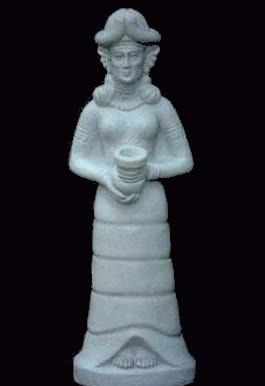

 There were Sikhs, Jains, Buddhists, Valmikis and Ravidasis apart from other Hindus to greet them. The persons who returned back to Hinduism included one senior Pastor Tulku Ram, one old and hapless widow Lajja Devi, two young sisters Sanam Samta and Safar Samta, two brothers Ashok and Kishore and one couple Vikas David and Anita David along with their families. Everybody had his or her own story of deception and cheating by those who once came to them as saviour in white cloak.
  Dalit widow Lajja Devi (62), a resident of Kasumpati area in Shimla, while talking to HimVani, narrated her pathetic tale. She said, “I not only lost my young grandson Rakesh (28) but also my faith. The Pastor assured me that my beloved grandson, who was a serious patient of brain tumour, will be cured, provided we all bring belief in Jesus Christ. As he was the only earning member in my family of 15 and we had no reason to disbelieve the Pastor, we all got converted to Christianity. The Pastor also mislead us and threw the sacred Ganga Jal in the toilet and the idols and pictures of Gods and Goddesses were thrown in nearby nalla. But after a couple of days, Rakesh died.”
  While talking to HimVani, the former senior Pastor Tulku Ram became very emotional. He said, “I was literally cheated. In 1997, while I was doing my graduation, they (missionaries) contacted me and assured me a good job, provided I got converted. But after conversion, they sent me to Agape Bible College, Ludhiana, for one year training and then to G.F.A. College, Kumbnad (Kerala) for further one year training. I had little options at that time because of my fragile economic condition. Having appointed as Pastor, I started converting poor people, mostly ailing, by giving them assurance that they will be cured by bringing faith in Jesus and prayers.” He also revealed that his outfit ‘Masihi Sangati’ belonging to the Protestants had converted more than 1,000 people in Himachal Pradesh.
 Same thing occurred with the family of Sanam and Safar. Their grandmother was seriously ill and the fake healers in white cloak took advantage of that and got the whole family converted. The condition of that old lady did not improve by prayers in the Church. One Deepak was lured for free education to her daughter and one Chandan Pal was assured a job. But the promises were not kept. Now they all, after coming to their original home, are feeling good.
  The programme, first of its kind in the history of this hill state, was organised under the aegis of All India SC and ST Mahasangh; HP and its president Tarsem Bharti played a key role in bringing them all to their original home. He said, “It is a question of human rights because they were basically cheated and left at the mercy of those who are known for their crafty designs.”