Friday, November 16, 2007

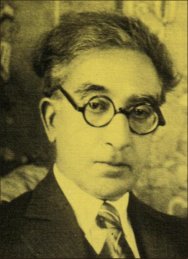
Ionic, by Constantinos Cavafis

.


That we’ve broken their statues,
that we’ve driven them out of their temples,
doesn’t mean at all that the gods are dead.

O land of Ionia, they’re still in love with you,
their souls still keep your memory.
When an August dawn wakes over you,
your atmosphere is potent with their life,
and sometimes a young ethereal figure,
indistinct, in rapid flight,
wings across your hills.


(C.P. Cavafy, Collected Poems. Translated by Edmund Keeley and Philip Sherrard.)

.

Wednesday, November 14, 2007

Christiane Sourvinou-Inwood

.

Influential Classical scholar who brought methodological rigour to the study of Ancient Hellenic religion and ritual


Christiane Sourvinou-Inwood was an international authority in the field of Ancient Greek religion and one of the most prolific and influential Hellenists of her generation.

She was remarkable for her penetrating and uncompromising intellect and for her astonishing range of scholarly interests, which spanned almost every area of Ancient Greek culture from Minoan iconography to Greek tragedy.

She was born in Volos, Greece, in 1945, but grew up in Corfu. Her father was a colonel in the Greek Army, her mother a teacher. Sourvinou-Inwood studied as an undergraduate at the University of Athens, and began research in the young and exciting field of Mycenology in Rome and later in Athens.

Coming to England in 1969, she graduated from Oxford in 1973 with a doctorate on Minoan and Mycenaean beliefs in the afterlife, and went on to a junior research fellowship at St Hugh’s College, Oxford. She then worked as a lecturer at Liverpool (1976-78), as a senior research Fellow at University College, Oxford (1990-95), and as Reader in Classical Literature at the University of Reading (1995-98). She turned down many more foreign invitations than she accepted, but she did cross the Atlantic to give the Carl Newell Jackson lectures at Harvard in 1994, and she gave the Martin P. Nilsson lecture in the Swedish Institute at Athens in 1997.

The focus of her early work was the Bronze Age and its iconography; experts still cite her brilliant defence of the authenticity of one particularly beautiful Minoan ring in the Ashmolean Museum in Oxford – about which later discoveries proved her right. But in time her interests gravitated to the Classical period, and she was as adept at using textual sources as at using images and material culture – something which few classicists achieve.

She was particularly interested in rituals relating to young women and devoted a book to some of the interpretative problems connected with the sanctuary of Artemis at Brauron near Athens, where young girls danced as bears (Studies in Girls’ Transitions, 1988).

Another interest, sustained since her doctorate, was Greek representations of the afterlife, her definitive statement on which was Reading Greek Death (1994). Perhaps most significant of all was her examination of the ways that Ancient Greek religion was determined by the political structure of the city state, set out in a paper What is Polis Religion? (1990), which bristles with insights in every paragraph. She explored literary aspects of the same theme in her provocative reading of Sophocles’ tragedy Antigone (1989), and at greater length in her Jackson lectures which were published as Tragedy and Athenian Religion (2003).

Methodology was a vital concern and she developed a repertory of technical terms such as “reading” (roughly, “methodologically rigorous interpretation”); “schema” (an ideologically significant narrative pattern); and “zooming” (the effect of bringing the world of the text or image nearer to the world of the viewer or listener). It was, and still is, unusual for classicists to be so explicit about methodology, and reviewers often commented on the style, length or frequency of her methodological pronouncements. She was unrepentant. In the first chapter of her Reading Greek Culture (1991) she explained that she aimed to produce a “neutral” interpretation by rigorously eliminating all modern assumptions and “perceptual filters” derived from unreflective common sense or traditional scholarly baggage.

Her “reading” of the texts or images could then begin, and an important part of it was the identification (or “recovery”) of ideological “schemata”. The result was sometimes to show that texts believed to have specific historical reference were better understood as ideological constructions, but if that meant we now knew less about history, we at least knew more about ideology.

Sourvinou-Inwood insisted that her aim was to establish “ancient realities and perceptions”. Thus, just as naive empiricism was her early target, so, later, she was anxious to combat extreme scepticism about the past, “nihilism” as she called it in her final book, Hylas, the Nymphs, Dionysos and Others (2005).

Her approach shares a lot with the structuralism of the French scholars Jean-Pierre Vernant and Pierre Vidal-Naquet, both associated with the École des Hautes Études, and in its later formulation it owed something to semiotics and even poststructuralism. But she was no follower of academic fashion, and her approach should be seen as an independent response to her own interpretative experience.

Those who knew her only from her publications were likely to form the impression of a certain intellectual defensiveness and a tendency to devote more space and ingenuity to demolishing her critics’ arguments than was strictly necessary. But to those who experienced her in the lecture room, she was an inspiring teacher and a warm-hearted mentor, convinced that even the least promising undergraduate was capable of brilliance if given enough encouragement.

Her own sense of being an outsider had given her a heightened empathy. That she taught formally for only brief periods is a great loss to the institutions that could have employed her, and to the profession.

Ill-health restricted her movement in the last decade of her life, but she still made herself available to friends, disciples and awed fans who visited her in Oxford, usually to be entertained over lunch in an Italian restaurant. To younger scholars facing uncertainty in the early stages of their careers, she could be a tower of support.

Her own tower of support was her husband, Mike Inwood, philosophy tutor at Trinity College, Oxford, whom she married in 1971.

Considering the volume of her publications, it is remarkable that she also wrote a series of detective novels. One appeared in Greek in 2003 as Enas polu klassikos phonos under the pseudonym Christiana Elfwood (the English version is to appear imminently).

She married first J. P. Olivier (divorced). Her second husband survives her.

Christiane Sourvinou-Inwood, Classical scholar, was born on February 26, 1945. She died of cancer on May 19, 2007, aged 62


From "The Times".

.

Monday, November 12, 2007

"Hate You, Christ, I Do Not", by Fernando Pessoa

.

Hate you, Christ, I do not, or seek. I believe
In you as in the others gods, your elders.
I count you as neither more nor less
Than they are, merely newer.

I do hate, yes, and calmly abhor people
Who seek you above the other gods, yours equals.
I seek you where you are, not higher
Than them, not lower, yourself merely.

Sag god, needed perhaps because there was
None like you: one more in the Pantheon, nothing
More, not purer: because the whole
Was complete with gods, except you.

Take care, exclusive idolater of Christ: life
Is multiple, all days different from each other,
And only as multiple shall we
Be with reality and alone.


(09.10.1916)


'Selected Poems', translated by J.Griffin.
.

Tuesday, November 06, 2007

Serpentine Power In Greece And India

.

The essential role played by serpents in some mythical Greek episodes does not appear to be sufficiently clarified. In view of the impossibility to find decisive explanations in the Hellenic culture itself, we decided to use an instrument of historical-religious analysis, the comparative method, to find an extra-Hellenic example with a sufficient degree of relevancy to enlighten the religious "reality" that underlies these serpentine episodes (note 1). The country where the systematization of the symbolism of the serpent is accessible and with a suitable development for our purpose is India. In this multiform culture we will try to find an example that offers an explanatory linkage for the sparse information that survives in the Hellenic culture.

Diviners, Serpents and Staves

Melampous and Teiresias

Several Greek mythological characters attain mantic capacity because of their contact with serpents. Melampous and Teiresias are exemplary, illustrating two different ways in which to reach the transmutation of common human nature into a superior one (the conversion into diviners, mediators between gods and men).

The serpents lick the ears (note 2) of Melampous (note 3), he obtains the comprehension of bird language and guesses the future. He later becomes a iatromantis, a healer using sacred dances (he is a girls' initiator (note 4) ) but also other physical (perhaps his own name is a reference to the use of plants in healing (note 5)) or supernatural methods.

Teiresias obtains mantic power in two different ways which differ according to the classical sources we use. In the first version that starts with Hesiod (fr. 275 M/W = Dichaiarchos fr. 37 Wehrli = Callimachus fr. 576 Pfeiffer Phleg. 257 F 36 Jacoby-) and is transmitted for example by Apollodorus (III[70] 6,7), Hyginus (75) and Ovid (Met. III, 322ff.), (note 6) the gift of divination is conferred by Zeus because of the mediation in the controversy against Hera to decide which of the sexes find more pleasure in copulation. Teiresias has been man and woman and was thus qualified to answer that the greater pleasure is perceived by the woman. Zeus, the feminine secret unveiled, attains the victory; but Hera, vexed, blinds Teiresias. Teiresias' change of sex is motivated by the fact that he had touched or wounded with his staff two serpents entwined in sexual intercourse. The other version (note 7), transmitted by Pherekydes (3 F 92a Jacoby Apollod. III[70], 6,7-), Callimachus (H. V, 5,75ff.) and Nonnos (D. V, 337ff.) states that Athena, seen naked by Teiresias, was obliged to punish him with blindness, but to compensate Chariclo, mother of the diviner and loyal servant of the goddess, she purified his ears and bestowed on him the gift of understanding the language of birds. Furthermore she offered him a staff that allowed him to walk like a sighted person.

Despite the differences observed, the background of both versions is similar in essence:

  • the blindness is compensated with the gift of divination (that turns out to be an alternative way of seeing);
  • the decisive role played by the serpents in the sexual mutation of Teiresias in the first version seems very similar to the purification of the ears effected by Athena (evidently the same modus operandi of the serpents with Melampous) in the second version.

The Serpentine Staff

In the version transmitted, for example, by Ovid (Met. III, 316ff.) or Hyginus (75) (note 8)Teiresias touches the copulating serpents with his staff, triggering the metamorphosis. Evidently Teiresias' action momentarily creates a figure whose iconographical shape is a staff with intertwined serpents. Such a staff already existed in the Hellenic culture, taking the technical name kerykeion (note 9), and was used by Hermes on the divine level and the heralds on the human level, as can be seen in iconography (note 10) (illustration 1). An interesting text of Hyginus (Astron. II,7,2) (note 11) narrates the manner in which Hermes obtains the serpentine staff, in circumstances identical with those originating Teiresias' sexual mutation (only the interpretation differs, the separation of the serpents is understood as a pacification, according to the major function of the kerykeion as staff of the mediator). The link between both evidences is clear (note 12) , and we believe that the meaning must be similar.

All the bearers of the serpentine staff (Teiresias included in the group) have a common link: they are mediators; the heralds on the political level, Teiresias between genders and later between gods and men. Hermes, the most interesting, in a holistic field, uniting with his presence the underworld, the sky and the earth, moving between the kingdoms of the gods and the land of humans, linking divergent and opposed spaces (note 13).

Branchos: The Diviner Without Serpent

An episode in the life of Branchos, the mythical founder of the Didyma's oracle and ancestor of the priestly lineage of the Branchidai, is significant for our purposes and determines the name of the character. According to Cono, while Brancho's mother was in labour, she had a vision in which the sun penetrated by his mouth, and passing through the stomach, ended the path in sex (note 14) (evidently an "experience of light" (note 15)). Because of this visionary experience (the sun passed through the bronchial tubes) she named her son Branchos. Later, his homosexual love for Apollo leads to the conversion of Branchos into a powerful diviner (Branchios is one of the epithets of the god).

In an attempt to explain the vision of Branchos' mother, the episodes of Melampous and Teiresias and the serpentine head of the kerykeion we have resorted to a religious tradition that displays in a structured manner most of the elements that scattered throughout Greek mythology are incoherent.

Serpentine Power and Tantric Mystical Physiology (note 16)

The Origin and Antiquity of Tantrism

The major drawback to using Tantrism in comparative religion is the lack of literary evidence of the movement prior to the sixth century CE (note 17). But the literary transmission, or even the generalization of a doctrine does not imply the nonexistence of previous strong and long-dated roots. On the one hand, the significance of the cult to Shiva-Shakti (note 18), the basis of Tantrism, exhibits an evident archaism in some aspects. On the other hand, Tantrism does not seem to be a movement of rupture, and does not display elements of radical innovation. Tantrism is a religious movement that elaborates concepts pre-existing in the Vedic tradition, combining them with religious practices from different sources. The historical sociology of Tantrism is still impossible to outline (the difficulty increases the farther back), all these uncertainties making it increasingly difficult to detect the role of Prearian and popular tradition in the formation of Tantrism. The fact that the greatest development is observed in contact zones (northern India), open to foreign influences, may indicate that in these ambits the rigidity of traditional religion was surpassed, and the priestly elite embraced alternative (foreign or sociologically different) practices. Thus, we could delimit the three major roots of Tantrism, the Vedic one, the autocthonous (Prearian but perhaps popular also) and the aloctone (Asiatic Chamanic techniques, perhaps even Gnostic influences, as Mircea Eliade suggests (note 19)). In spite of the hypothetical basis of the analysis, it seems acceptable that Tantrism is not a modern phenomenon in its roots even if the literary formulation and the major expansion were developed towards the end of the first millenium and during the first part of the second. The archaism of some Tantric practices allows us to justify the comparison with the Greek practices (we are not comparing religious forms with more than thousand years between them, but possibly practices of a similar antiquity).

The Tantric Mystical Physiology

The basis of Tantric esoterism is the experience of liberation revealed in the adept's body (note 20) in which two powers coexist in a latent stage, one situated in the lower part of the trunk (the feminine principle or Shakti), the other in the upper part of the head (masculine principle or Shiva). Joining both we find a number of channels (named nadis), the three major ones being Sushumna (in a straight line and the main channel), Ida (left channel, lunar and feminine) and Pingal (right channel, solar and masculine). The last two nadis are entwined round Sushumna , meeting at a number of centres, named cakra, where subtle energy gathered. In the most usual system called acakra (six-centred) they are seven in number (the six cakra and the seventh in the upper part of the skull). The lower centre, named Muladhara cakra or cakra root of the nadis, placed in the intermediate region between genitals and anus is the seat of the personal Shakti that appears coiled among common men (named kundalini: the coiled one), in repose and with the appearance of a serpent. The following are Svadhisthana cakra, over the genitals, Maipra cakra or centre of the region of the navel, Anahata cakra or centre of the heart, Vishuddha cakra or centre in the region of the throat, Ajna cakra or centre between the eyebrows where the nadis unite to ascend to Sahasrara or the lotus with a thousand petals placed in the upper part of the skull (perhaps in the fontanelle in spite of the fact that we are summarizing a subtle or mystical physiology with no real correspondence in organs or regions of the common physiology). The masculine power or Shiva settles in this centre and seems not to be included in the acakra system being in essence supracorporeal.

The purpose of the system is to make the serpentine power ascend from Muladhara cakra to Sahasrara; whoever reaches this union becomes a jivanmukta (note 21), a person who has attained liberation of the limitations of the human condition (achieving release from the wheel of reincarnation---Samsara). Serpentine power (Kundalini) must ascend exclusively by the central channel (Sushumna) to produce the alchemy of liberation.

Elements of Comparison

Summarizing, Tantrism shows the following elements for the comparison:

  • The purpose of Tantric mystical physiology is the transmutation of the common human being into a truthful man, a superior creature who knows all things (because he has experienced the nature of divinity, in this case the union between Shiva and Shakti) and in which the dissolution (laya) of the ordinary essence was produced.
  • The serpent appears as the personification of the power that promotes the transmutation in the body of the adept.
  • The sexual region is basic in the system. The canonical practices based the trigger for ascent of Kundalini on ascetic techniques, but other schools (perhaps the most archaic ones, close to the primitive Sivaism) seem to use hetero or homosexual techniques to awaken the serpentine power.
  • The iconographical representation of the nadis was a straight line with intertwined serpents.
  • The nadis Ida and Pingala were related to the nasal breathing (perhaps Sushumna to oral breathing).
  • To describe the fusion between Kundalini-Shakti and Shiva in Sahasrara the comparison is used with the "brightness of a hundred suns" (evidently an "experience of light").

Comparative Religion:
Teiresias, Melampous, Branchos and Tantric Mystical Physiology

We find a number of coincidences between the experiences of Teiresias, Melampous and Branchos and the Tantric initiates:

  • After fulfilling these experiences, they become special beings, diviners, powerful men: Melampous is an iatromantis, Teiresias maintains after death intact his cognitive abilities, Branchos establishes a parental guild of diviners. The Tantric adepts, as we have seen, reached different physical and spiritual powers upon experiencing the inner mystical union. Their esoteric knowledge is a matter of small gatherings of initiates, often transmitted inside the family group. In both cases we find experiences of a minority, men without common vital trajectories.
  • Melampous and Teiresias undergo a serpentine experience that leads to their transmutation. In the case of Melampous, the serpents purify his ears and reveal to him the knowledge of a completely different world. In the case of Teiresias, the experience with a male and a female serpent (the relationship with the nadis Ida and Pingala seems evident) provoke the change of sex that closely resembles to the androginy (note 22) of the Tantric adept who experiences in his body the alchemy of the supreme mixture of masculine and feminine essences. The serpentine symbol is used in both cases in a very similar field of significance (note 23).
  • The experience of the mother of Branchos is very similar to the "experience of light" of the Tantric adepts but occurs inversely, the relationship with Buddhist sexual Tantric practices in which Bindu (subtle energy concentrated at a point and closely connected with breathing) "let down from the upper part of the head and fills the sexual organs with a jet of quintuple light" (note 24) is clear. The nasal cavities (and also the mouth) develop in Tantrism a basic role in the respiratory exercises to awaken Kundalini. Without forcing the identification to the point of connecting the name Branchos (in its etymological sense) to the subtle channel Sushumna, it should be stressed that both "experiences of light" are very similar.
  • The importance given in Greece to the kiss of the god in order to accede to complete mantic power (undoubtedly in the case of Branchos and very probably in the case of Melampous) is yet another fact of a sexual nature (in this case not transexual -as in the example of Teiresias- but clearly homosexual). We could approach these practices from the angle of the homosexual rites used in Tantrism to awaken Kundalini (anal penetration is one of the most powerful triggers to provoke the ascent of serpentine power in some sects of the left hand), but we could also, thanks to the Tantric example, attempt to deepen in the explanation of the homosexual Greek practices adopting a different approach from that utilized in the excellent works of Bernard Sergent (note 25). Greek homosexuality seems therefore to be included originally in a complex initiatic paideia (in both senses of initiatic) (note 26): the learning of the real essence of the human being and his potentiality, including homosexual practices with mystical purposes (to awaken the serpentine power). The experimentation of this power determines the special status of the initiate within the social group (the nobles were superior kalokagathoi- because of their knowledge of this "mystery"). We propose a partial explanation of the lack of inhibitions of the Greek aristocrats (Plato at the head of the list) in the face of this kind of behaviour and also the secrecy surrounding the practice.

Hermes, The Kerykeion and Gorgo

The intertwining of the three nadis creates a figure very similar in essence to the Greek serpentine staff named kerykeion. The god Hermes is normally shown bearing it in the iconography (note 27), this being one of the definitive attributes to assure identification. It seems worthwhile to analyse briefly the tasks of the god to clarify his role in the mystical physiology that we are endeavouring to unravel (note 28). A deity of ambiguity, he is the lord of the lands with diffused frontiers. He is epitermios, divinity of all the limits, not only the frontiers of the social topography but also the psychic or mythical one. He is the support of the traveller who crosses the frontier of the known country, of the foreigner far from his fatherland; he indicates the ambiguous point of confluence of the territory of two poleis; he helps thieves (note 29), working on the fringe of the social system. He is also psychopompos, helping the dead to find the way from the world of the living to the underworld (note 30). His son (daughter) Hermaphroditos (note 31) and a number of his archaic representations (note 32) show that he moves in the sexual indetermination or even in androginy. As herald of Zeus he unifies the human world with the reigns of the gods. He is the central divinity in the space construction of the Greeks, as pointed out by Vernant (note 33), he determines the links among the different ambits that give structure to the social and religious Greek imaginary. A deity of transitions (including, evidently, the "rites of passage" (note 34)) he is the perfect candidate for presiding over practices that include a transition to a different sort of existence and an ascensional ritual. Iconography could assist in illustating this. In one of the earliest images of the god, in the olpe of the Gorgon painter (circa 600-590 BE) in the National Museum of Athens (note 35) (illustration 2), Hermes is portrayed with the kerykeion held aloft his right hand and flanked by two winged sphinxes. The image is included in a series of representations dated between 600 and 560 in which Hermes is flanked by mythical winged creatures (sphinxes or sirens) (note 36). The meaning of the scenes does not seem to be completely clarified (the interpretation of the master of animals seems much too simple). The scene can be interpreted by comparison with the relief of the Cretan bronze helmet in the Norbert Schimmel Collection (New York) (note 37) (illustration 3 not in this article, see cited ref.) showing two winged youths holding intertwined serpents. Hermes in the first case fulfills the same role as the serpents in the second and the kerykeion in the centre of the image seems to emphasize this significance. To control the serpentine power is the task of the god and the winged beings are a represention of the ascension included in the rite. Seen from this point of view, we could almost risk an attribution to the pair of winged genies of the New York helmet. This doublet is in essence only one (with the same significance as the ambiguous god who presides over the serpentine power), being like a double Hermes.

Another mythical being, whose meaning is lately being investigated by a number of researchers (note 38) and who is shown as possessing similar attributes (wings, serpents) is Gorgo. In the oldest iconography his/her sex is undetermined (note 39), and this being is represented like a terrible strength, the control of which determines a superior power. His/her head surrounded by serpents in a number of images (note 40), his/her body entwined with reptiles (for example in the pediment of the temple of Artemis in Corcyra where the serpents form a girdle (note 41) (illustration 4-), Gorgo seems a candidate to symbolize among the Greeks the radical alterity named Kundalini in Tantric tradition, a terrific power mastered by a select group of special men, transformed into heroes.

Thanks to the Indian parallel we can better understand the subtle role of Hermes, the god in the Greek pantheon who best symbolizes the ritual of ascension and change to a new reality that is the experimentation of serpentine power, the alterity and strength of which are reflected in the hypnotic and terrifying glance of Gorgo.

Conclusions

Among the Greeks a knowledge seems to be attested of subtle or mystical physiology having a number of elements comparable with Indian Tantrism. The symbols (serpent, light, ascension) and the experience (importance of sex, access to a greater personal development) are similar. In the Greek case the information is hidden in the mythical language (in the literary or iconographical transmission), reelaborated and transmitted in most cases by authors who are unaware of the real dimension of the facts they are relating. Without the instruments of the comparative method the sole interest of the vicissitudes of diviners such as Teiresias, Melampous or Branchos, heroes like Perseus or gods like Hermes is to show the ravings of mythical creation; in the light of the Indian example, the Greek myth grows in meaning and could be explained, in part. It is hard to agree with the idea that both traditions draw on a common source (because of the paucity of documentation) and difficult to affirm that a lending relationship exists between both countries (note 42) and cultures in the archaic period or even earlier; it seems more acceptable to defend that we are dealing with similar models to characterize extraordinary religious experiences. But the result is different and exemplifies the cultural adaptation produced in the social mentality in each country that seems to illustrate the archaism of the practices and permits us to refute a recent loan. Heroes, kings or diviners in the Greek case or creatures liberated from the bonds of human nature in the Indian case are two ways to represent the man who had developed potentialities beyond the reach of common human beings.


Notes

  1. We follow a methodology of analysis completely different from Krappe, A.H. "Teiresias and the Snakes" AJPH 49, 1928, 267-275 in spite of using the Indian parallel in both approaches.
  2. Hesiod fr. 261 M/W (Schol. Ap. Rhod. 11, 118-121); Apollod. I[96], 9, 11. The same means confer the gift of divination on Hellenos and Kassandra (cf. Schol. Hom. Il. VII, 44); see Halliday, W.R. Greek Divination, Chicago, 1913, 83ff. The role of Melampous in the pseudo-hesiodic Melampodia (see Loeffler, I., Die Melampodie, Meisenheim 1963 or Schwartz, J. Pseudo- Hesiodeia, Leiden 1960, 227ff.) must have been essential but the fragments surviving (M/W 270-279) held no interest for our research.
  3. For recent approaches, see Jost, M. "La legende de Melampous en Argolide et au Peloponnese" Simon, E. "Melampous" in LIMC VI, 1992 405ff. (iconography); Scarpi, P. "Melampus e i miracoli di Dionysos" in Perennitas. Studi Angelo Brelich, Roma 1980, 431ff. and Su rez de la Torre, E. "Les pouvoirs des devins et les recits mythiques: l'exemple de Melampous" LEC LX, 1992, 3ff. Also Pley, R. in RE XV,1 s.v. or Wolff, O. in Roscher's Lexikon II,2 s.v..
  4. Dowden, K. Death and the Maiden. Girls' Initiation Rites in Greek Mythology, London/New York, 1989, 71-115, he follows the ideas expressed by Burkert, W. Homo Necans, Berlin, 1972, 191- 194 and Structure and History in Greek Mythology and Ritual, London, 1979, 86-87.
  5. The relationship between Melampous and the Melampodion (Helleborus Orientalis Lam.) was quoted by Murr, J. Die Pflanzenwelt in der griechischen Mythologie, Innsbruch, 1890, 228; also Edmunds, L. "The Cults and Legend of Oedipus" HSPh 85, 1981, 221ff.
  6. Version A in the catalogue of Brisson, L. Le mythe de Tiresias, Leiden, 1976, 12-21. The book of Brisson is the best analysis of the mythical diviner, also Garcia Gual, C. "El adivino Tiresias o las desgracias del mediador" in Mitos, Viajes, Heroes, Madrid, 1981, 121ff.
  7. Version B (Brisson). See also Loraux, N. "Ce que vit Tiresias in Les experiences de Tiresias, Paris, 1989, 253- 271. We do not take into account the aberrant version in Sostratos (32 F 7 Jacoby; SHell. II, 733, 352-353 -Eustath. Hom. Od. 10, 492-).
  8. In the cases Ao2, 4, 6, 9, 10 and 11 (Brisson) the use of a staff is quoted, in the other versions Teiresias kills or wounds the serpents but no mention is made of the use of a sword (contra de Waele, F.J.M., The Magic Staff or Rod in Graeco-Italian Antiquity, Gent, 1927, 146ff.).
  9. See Boetzkes, R. Das Kerykeion, Giessen, 1913 (summed in RE 11, 1921, col. 330ff.); de Waele, op. cit.(supra note 8) passim; Schouten, J., The Rod and Serpent of Asclepios, Amsterdam-London-New York, 1967, 177ff.; Preller, L., "Der Hermesstab" Philologus I, 1846, 516ff.; Hoffmann, O.A. Hermes und Kerykeion, Marburg, 1890.
  10. See Crome, J.F. "Kerykeia" AM 63/64, 1938/1939, 117ff.; Diez de Velasco, F., "Un aspecto del simbolismo del kerykeion de Hermes" Gerion 6, 1988, 39ff.; Siebert, G. "Hermes" in LIMC, V, 1990, 381ff. For the kerykeion of the Norbert Schimmel Collection (New York) see Muscarella, O. W. (ed.) Ancient Art. The Norbert Schimmel Collection, Mainz, 1974, num. 28 (with bibliography, dated in the sixth or early fifth century BE).
  11. "... petenti Apollini ut liceret se dicere inuenisse lyram, concessit, et ab eo uirgulam quandam muneri accepit. Quam manu tenens Mercurius, cum proficisceretur in Arcadiam et uidisset duos dracones inter se coniuncto corpore alium alium adpetere, ut qui dimicare inter se uiderentur, uirgulam in utrumque subiecit; itaque discesserunt. Quo facto, eam uirgulam pacis causa dixit esse constitutam. Nonnulli etiam, cum faciunt caduceos, duos dracones inplicatos uirgula faciunt .." ed. A. Le Boeuffle, Paris,(CUF), 1983, 34-35.
  12. We follow the argumentation in Brisson, op. cit.(supra note 6), 55 who seems to have only one hypothetical iconographical confirmation (expecting the complete analysis in the LIMC - forthcoming-) in an Etruscan bronze vase in the Museo Archeologico of Arezzo (Brisson, op. cit. -supra note 6- fig. 10) with the representation of Teiresias and a staff with entwined serpents at the top.
  13. See infra. part 4.
  14. 26 F 1(33) Jacoby (Phot. Bibl. 186,33)
  15. See Eliade, M. M phistopheles et l'androgyne, Paris, 1962, chap. 1.
  16. We follow particularly the general surveys in Padoux, A. "Tantrism" in Eliade, M. (ed.) Encyclopaedia of Religions (ER), New York, 1987, vol. 14, 272-280; Eliade, M. Le Yoga: immortalit et libert , Paris, 1964, chap. 6; Dasgupta, S. Obscure Religious Cults, Calcutta, 1963; Gupta, S. (et alii) Hindu Tantrism, Leiden, 1979 and Zimmermann, H. "Le Tantrisme. Origine et caract Lettres 3, 1982, 11-43 (especially for the origins of Tantrism) and the editions of texts in Woodroffe, J., Principles of Tantra, Madras, 1913; id., The Serpent Power, Madras, 1928 and id. Sakti and Sakta, Madras, 1927, 3rd ed.
  17. See Padoux, A. "Hindu Tantric Literature" in ER 6, 365-367 (including the translations in the major European languages and the main bibliography), the information is much more thorough in Kaviraj, G. Tantrik Sahitya (in Hindi), Lucknow, 1972.
  18. See for example Danielou, A. Mythes et dieux de l'Inde, Paris, 1992 (1975), 329ff. 387ff.; O'Flaherty, W.D. Shiva: the Erotic Ascetic, London, 1980 or Lorenzen, D. N. / Padoux, A. (et alii) "Shaivism" ER 13, 6-20.
  19. Eliade, op. cit. (supra note 16), 199.
  20. We follow particularly Woodroffe, The Serpent Power (supra note 16), passim; Padoux, A. "Cakra" in ER 3, 4-5; id. "Kundalini" in ER 8, 402-403 and Silburn, L. La kundalini: l'energie des profondeurs, Paris, 1983.
  21. Gupta, S. "Jvanmukti" in ER 8, 92-94.
  22. On androgyny see O'Flaherty, W.D./Eliade, M. "Androgynes" in ER 1, 276-281; O'Flaherty, W.D. Women, Androgynes, and Other Mythical Beasts, Chicago, 1980 (sp. chap. V); Baumann, H. Das doppelte Geschlecht, Berlin, 1955; Eliade, M. op. cit. (supra note 15) chap. 2 or Delcourt, M. Hermaphrodite. Mythes et rites de la bisexualite dans l'antiquite classique, Paris, 1958 (chap. III on Teiresias).
  23. The symbolism of the serpent is extremely complex and varied, see for example Lurker, M. "Snakes" ER 13, 370-374; id. Adler und Schlange, Tuebingen, 1983; Mundkur, B. The cult of the Serpent, Albany, 1983 (chap. 4 on sex and serpent) or Koester, E. Die Schlange in der griechischen Kunst und Religion, Giessen (RGVV 13,2), 1933.
  24. Eliade, op. cit. (supra note 15), chap. "lumi maithuna" based on Guhyasamaja Tantra.
  25. Sergent, B. L' homosexualite dans la mythologie grecque, Paris, 1984 especially chap. IV, and L'homosexualite initiatique dans l'Europe ancienne, Paris, 1986, define the role of homosexuality in the Greek class-age initiations, but do not go deeply into the meaning of the behaviour. Similarly, Bremmer, J. "An enigmatic Indo-European Rite: Paederasty" Arethusa 13, 1980, 279-298 or Cantarella, E. Secondo natural, Milan, 1988, chap. 1 (with a review of the different interpretations of the origin of Greek homosexuality from Bethe). See a previous attempt at explanation in Diez de Velasco, F. "Anotaciones a la iconografia y el simbolismo del laberinto en el mundo griego: el espacio de la iniciaci"n" in Olmos, R. (ed.) Teseo y la copa de Aison (Anejo de AEA XII), 1992, 195-197.
  26. Initiation as "rite de passage" and initiation as an access to knowledge of superior or mystical nature. On initiation in Greece see especially Jeanmaire, H.Couroi et Couretes, Lille, 1939; Brelich, A. Paides e Parthenoi, Rome, 1969; Dowden, op. cit. (supra note 4); Sourvinou-Inwood, C. Studies in Girls' Transitions, Athens, 1988; Vernant, J.P./Vidal-Naquet, P. La GrLa Grece ancienne, 3, 1992 especially chap. 5 and chap. 8 or Dowden, K. The Uses of Greek Mythology, London/New York, 1992 chap. 7,2, 110-118. More general Bianchi U. (ed.) Transition Rites, Rome 1986 (1984); Ries, J. Les rites d'initiation, Louvain 1986 (1984); L'initiation 2 vols. Montpellier 1992 (1991); Leveque, P. Les rites de passage dans l'antiquite in MEFRA 102, 1990, 7-137. More bibliography on initiation over the world in Eliade, M. / Kaelber, W. O. / Lincoln, B. "Initiation", ER 7, 224-238.
  27. See Siebert, op. cit. (supra note 10), ils. 185ff.
  28. The major lines of these analysis were sketched in Diez de Velasco, F. "Un aspecto del simbolismo del kerykeion de Hermes" Gerion 6, 1988, 39ff.
  29. See Brown, N. O. Hermes the Thief. The Evolution of a Myth, Madison, 1947.
  30. See Eitrem, S. Hermes und die Toten, Christiania, 1909; Philippart, B. "Hermes, repartiteur des ames" RBPh 1930, 549ff.; Raingeart, P. Hermes psychagogue, Paris, 1935, Kerenyi, K. Hermes, der Seelenfuehrer, Zurich, 1944 or Karouzou, S. "Hermes Psychopompos" AM 76, 1961, 91-106.
  31. See Delcourt, M. Hermaphrodite, Paris, 1958 (chap. IV); id., Hermaphroditea, Brussels, 1966 or Ajootian, A. "Hermaphroditos" in LIMC V, 1990, 268-285.
  32. See Marcade, J. "Hermes doubles" BCH 76, 1952, 596ff
  33. See the masterly analysis of Vernant, J.P. "Hestia-Hermes sur l'expression religieuse de l'espace et du mouvement chez les Grecs" in Mythe et penssee chez les Grecs, Paris, 1965, 124-170; enlarged in Kahn, L. Hermes passe ou les ambiguites de la communication, Paris, 1978; id. "Herm l'identite" Ktema 4, 1979, 201ff.
  34. See Costa, G. "Hermes dio delle iniziazioni" CCC, 3, 1982, 277ff. Hermes is the god who naturally ought to preside over an initiation in the way expressed supra in note 26.
  35. Inv. 19159, Beazley, J. Paralipomena, Oxford, 1971, 9,11; Siebert, op. cit. (supra note 10), num. 230 (with illustration); Petrakos, B. Mus e National, Athens, 1982, 167 il. 145.
  36. Siebert, op. cit. (supra note 10), num. 230-240.
  37. Muscarella, op. cit. (supra note 10), num. 15 (with illustration and bibliography). Burkert, W. Structure and History in Greek Mythology and Ritual, Berkeley-London, 1979, 32, in a different way of research, marks the parallels with Mesopotamian images (e.g. the seal of Gudea in the Louvre - il.1, p.31-, other Near-Eastern examples in Van Buren, E.D. "Entwined Serpents" Archive fur Orientforschung, 10, 1935-36, 53ff.).
  38. The most comprehensive approaches are Vernant, J.P. La mort dans les yeux, Paris, 1985, sp. chap. 3,4 y 7; id. "La figure des dieux I: Gorg " in Figures, idoles, masques, Paris, 1990, 85ff. and Frontisi-Ducroux, F. Le dieu-masque, Paris, 1991. Also Krauskopf, I. "Gorgo, Gorgones" in LIMC IV, 1988, 287 for more bibliography (in spite of the omission of a number of the works of the "Paris school") and iconography. See also the use of comparative method to explain Gorgo (in a different way from ours) in Gershenson, D. E. "The Beautiful Gorgon and Indo-European Parallels" The Mankind Quarterly 29, 1989, 373- 390.
  39. Krauskopf, op.cit. (supra note 38), num. 4ff. (with illustrations).
  40. Examples in Krauskopf, op.cit. (supra note 38), num. 36, 45, 46, 67b, 156, 172, 234ff. (with illustrations).
  41. Dated in 590 B.E. See Rodenwaldt, G. Die Bildwerke des Artemistempels von Korkyra, Berlin 1939; Krauskopf, op. cit. (supra note 37), num. 289.
  42. Despite of using the comparative method the position followed in this paper differs completely from the diffusionist interpretations expressed for example in Frotingham, A. L. "Babylonian origin of Hermes the snakegod and the caduceus" AJA 20, 1916, 175ff. or in Krappe, op.cit. (supra note 1).


by Prof. Dr. Francisco Diez de Velasco

.
Friday, October 26, 2007

Carl Gustav Jung on Wotan

.

'What is curious is that an ancient god of storm and frenzy, the long quiescent Wotan, should awake, like an extinct volcano, to new activity, in a civilised country that had long outgrown the Middle Ages. We have seen him come to life in the German youth movement, and right at the beginning, the blood of several sheep was shed in honour of his resurrection.

'Armed with rucksack and lute, blond youths and girls were to be seen restlessly wandering on every road from the North Cape to Sicily, faithful votaries of the roving god. Later, towards the end of the Weimar Republic, the wandering role was taken over by thousands of unemployed. By 1933 they wandered no longer, but marched in their hundreds of thousands. The Hitler movement literally brought the whole of Germany to its feet, from five-year-olds to veterans, and produced the spectacle of a nation migrating from one place to another. Wotan the Wanderer was on the move.

'Wotan is a restless wanderer who creates unrest and stirs up strife and works magic. He was soon changed by Christianity into the devil, and only lived on in fading local traditions as a ghostly hunter who was seen with his retinue (the Wild Hunt) flickering like a will o'
the wisp through the stormy night.


'The German youths who celebrated the solstice with sheep sacrifices were not the first to hear a rustling in the primeval forest of the unconscious. They were anticipated by Nietzsche, Schuler, Stefan George, and Ludwig Klages. The literary tradition of Germany has a classical stamp that cannot easily be got rid of; every interpretation of intoxication and exuberance is apt to be taken back to classical models, to Dionysus.

'No doubt it sounds better to academic ears to interpret these things as Dionysus, but Wotan might be a more correct interpretation. He is the god of storm and frenzy, the unleasher of passions and the lust of battle; moreover he is a superlative magician and artist in illusion
who is versed in all secrets of the occult.
'We are convinced that the modern world is a reasonable place, basing our opinion on economic, political, and psychological factors. I venture the heretical suggestion that the unfathomable depths of Wotan's character explain more of National Socialism (Nazism) than all three reasonable factors put together. There is no doubt that each of these factors explains an important aspect of what is going on in Germany, but Wotan explains yet more.

'Perhaps we may sum up this general phenomenon as 'Ergriffenheit' - a state of being seized or possessed. The term postulates not only an 'Ergriffener' (one who is seized) but also an Ergreifer (one who seizes). Wotan is an 'Ergreifer' of men, and, unless one wishes to deify Hitler - which indeed has actually happened - Wotan is really the only explanation. It is true that Wotan shares this possession quality with his cousin Dionysus, but Dionysus seems to have exercised his influence mainly on women. The maenads were a species of female storm-trooper, and according to mythical reports were dangerous enough. Wotan confined himself to the Beserkers, who found their vocation as the blackshirts of mythical kings.

'It seems to me that Wotan hits the mark as an hypothesis. Apparently he really was only asleep in the Kyffhauser mountain until the ravens called him and announced the break of day. He is a fundamental attribute of the German psyche, an irrational psychic factor which acts on the high pressure of civilisation like a cyclone and blows it away. The Wotan-worshippers seem to have judged things more correctly than the worshippers of reason. Apparently everyone had forgotten that Wotan is a Germanic factor of first importance, the truest expression and unsurpassed personification of a fundamental quality that is particularly characteristic of the Germans.

'The emphasis on the Germanic race, the Germanic heritage, blood and soil, the ride of the Valkyries, Jesus as a blond and blue-eyed hero - all this is the indispensable scenery for the drama that is taking place and at bottom they all mean the same thing: a god has taken
possession of the Germans and their house is filled with a 'mighty rushing wind'.

'It was not in Wotan's nature to linger on and show signs of old age. He simply disappeared when the times turned against him, and remained invisible for more than a thousand years, working anonymously and indirectly. Archetypes are like river-beds which dry up when the water deserts them, but which it can find again at any time. An archetype is like an old watercourse along which the water of life has flowed for centuries, digging a deep channel for itself. The longer it has flowed in this channel the more likely it is that sooner or later the water
will return to its old bed.

'We are driven to conclude that Wotan must, in time, reveal not only the restless, violent, stormy side of his character, but also his ecstatic and mantic qualities. National Socialism will not be the last word. Things must be concealed in the background which we cannot imagine at present, but we may expect them to appear in the course of the future.'


Jung had much more than just an academic interest in Wodhanaz, in fact he came to believe that this god is the true deity of the Germanic peoples of Europe. Of particular interest in this regard was a dream Jung had the night his mother died. In his autobiography, 'Memories, dreams, reflections', Jung writes:

'The night before her death I had a frightening dream. I was in a dense, gloomy forest; fantastic, gigantic boulders lay about among huge jungle-like trees. It was a heroic, primeval landscape. Suddenly I heard a piercing whistle that seemed to resound through the whole universe. My knees shook. Then there were crashings in the undergrowth, and a gigantic wolfhound with a fearful, gaping maw burst forth. At the sight of it, the blood froze in my veins. It tore past me, and I suddenly knew: the Wild Huntsman had commanded it to carry away a human soul. I awoke in deadly terror, and the next morning I received the news of my mother's passing.


'Seldom has a dream so shaken me, for upon superficial consideration it seemed to say that the devil had fetched her. But to be accurate the dream said that it was the Wild Huntsman, the 'Grunhutl', or Wearer of the Green Hat, who hunted with his wolves that night. It was Wotan, the god of my Alemannic forefathers, who had gathered my mother to her ancestors.
'It was the Christian missionaries who made Wotan into a devil. In himself he is an important god - a Mercury or Hermes, as the Romans correctly realised, a nature spirit who returned to life again in the Grail legend. Thus the dream says that the soul of my mother was taken into that greater territory of the self which lies beyond the segment of Christian morality, taken into that wholeness of nature and spirit in which conflicts and contradictions are resolved.

'I went home immediately, and while I rode in the night train I had a feeling of great grief, but in my heart of hearts I could not be mournful, and this for a strange reason: during the entire journey I continually heard dance music, laughter, and jollity, as though a wedding were being celebrated.


'This paradox can be explained if we suppose that at one moment death was being represented from the point of view of the ego, and at the next from that of the psyche (soul). In the first case it appeared as a catastrophe; that is how it so often strikes us, as if wicked and pitiless powers had put an end to a human life....from another point of view, however, death appears as a joyful event. In the light of eternity, it is a wedding, a 'mysterium coniunctionis'. The soul attains, as it were, its missing half, it achieves wholeness.'

.

Thursday, October 25, 2007

"The Religion of the Ancient Greeks", by Mary Lefkowitz

.


Prominent secular and atheist commentators have argued lately that religion "poisons" human life and causes endless violence and suffering. But the poison isn't religion; it's monotheism. The polytheistic Greeks didn't advocate killing those who worshiped different gods, and they did not pretend that their religion provided the right answers. Their religion made the ancient Greeks aware of their ignorance and weakness, letting them recognize multiple points of view.

There is much we still can learn from these ancient notions of divinity, even if we can agree that the practices of animal sacrifice, deification of leaders and divining the future through animal entrails and bird flights are well lost.

My Hindu students could always see something many scholars miss: The Greek gods weren't mere representations of forces in nature but independent beings with transcendent powers who controlled the world and everything in it. Some of the gods were strictly local, such as the deities of rivers and forests. Others were universal, such as Zeus, his siblings and his children.

Zeus did not communicate directly with humankind. But his children -- Athena, Apollo and Dionysus -- played active roles in human life. Athena was the closest to Zeus of all the gods; without her aid, none of the great heroes could accomplish anything extraordinary. Apollo could tell mortals what the future had in store for them. Dionysus could alter human perception to make people see what's not really there. He was worshiped in antiquity as the god of the theater and of wine. Today, he would be the god of psychology.

Zeus, the ruler of the gods, retained his power by using his intelligence along with superior force. Unlike his father (whom he deposed), he did not keep all the power for himself but granted rights and privileges to other gods. He was not an autocratic ruler but listened to, and was often persuaded by, the other gods.

Openness to discussion and inquiry is a distinguishing feature of Greek theology. It suggests that collective decisions often lead to a better outcome. Respect for a diversity of viewpoints informs the cooperative system of government the Athenians called democracy.

Unlike the monotheistic traditions, Greco-Roman polytheism was multicultural. The Greeks and Romans did not share the narrow view of the ancient Hebrews that a divinity could only be masculine. Like many other ancient peoples in the eastern Mediterranean, the Greeks recognized female divinities, and they attributed to goddesses almost all of the powers held by the male gods.

The world, as the Greek philosopher Thales wrote, is full of gods, and all deserve respect and honor. Such a generous understanding of the nature of divinity allowed the ancient Greeks and Romans to accept and respect other people's gods and to admire (rather than despise) other nations for their own notions of piety. If the Greeks were in close contact with a particular nation, they gave the foreign gods names of their own gods: the Egyptian goddess Isis was Demeter, Horus was Apollo, and so on. Thus they incorporated other people's gods into their pantheon.

What they did not approve of was atheism, by which they meant refusal to believe in the existence of any gods at all. One reason many Athenians resented Socrates was that he claimed a divinity spoke with him privately, but he could not name it. Similarly, when Christians denied the existence of any gods other than their own, the Romans suspected political or seditious motives and persecuted them as enemies of the state.

The existence of many different gods also offers a more plausible account than monotheism of the presence of evil and confusion in the world. A mortal may have had the support of one god but incur the enmity of another, who could attack when the patron god was away. The goddess Hera hated the hero Heracles and sent the goddess Madness to make him kill his wife and children. Heracles' father, Zeus, did nothing to stop her, although he did in the end make Heracles immortal.

But in the monotheistic traditions, in which God is omnipresent and always good, mortals must take the blame for whatever goes wrong, even though God permits evil to exist in the world he created. In the Old Testament, God takes away Job's family and his wealth but restores him to prosperity after Job acknowledges God's power.

The god of the Hebrews created the Earth for the benefit of humankind. But as the Greeks saw it, the gods made life hard for humans, didn't seek to improve the human condition and allowed people to suffer and die. As a palliative, the gods could offer only to see that great achievement was memorialized. There was no hope of redemption, no promise of a happy life or rewards after death. If things did go wrong, as they inevitably did, humans had to seek comfort not from the gods but from other humans.

The separation between humankind and the gods made it possible for humans to complain to the gods without the guilt or fear of reprisal the deity of the Old Testament inspired. Mortals were free to speculate about the character and intentions of the gods. By allowing mortals to ask hard questions, Greek theology encouraged them to learn, to seek all the possible causes of events. Philosophy -- that characteristically Greek invention -- had its roots in such theological inquiry. As did science.

Paradoxically, the main advantage of ancient Greek religion lies in this ability to recognize and accept human fallibility. Mortals cannot suppose that they have all the answers. The people most likely to know what to do are prophets directly inspired by a god. Yet prophets inevitably meet resistance, because people hear only what they wish to hear, whether or not it is true. Mortals are particularly prone to error at the moments when they think they know what they are doing. The gods are fully aware of this human weakness. If they choose to communicate with mortals, they tend to do so only indirectly, by signs and portents, which mortals often misinterpret.

Ancient Greek religion gives an account of the world that in many respects is more plausible than that offered by the monotheistic traditions. Greek theology openly discourages blind confidence based on unrealistic hopes that everything will work out in the end. Such healthy skepticism about human intelligence and achievements has never been needed more than it is today.


Mary Lefkowitz, in the L.A. Times

.

Tuesday, October 16, 2007

Rune Stone Deciphered

.
The mysterious rune stone found under a church floor in western Norway has been identified.


The stone, found under the floor at Hausken church in Rennesøy, Rogaland, was used as part of the foundation when the church was built in 1856.

Archeologists at first believed they had found a new rune stone that was nearly 1,000 years old, but they now have identified it as part of a large tombstone that was previously reported in 1639 and 1745.

The stone lay outside the door of the old stave church, and the remains of this stone have now been found under the floor, beneath the pulpit.

"We thought at first that we had found a completely unknown stone, and we misread one of the runes," archeologist Helge Sørheim told Aftenposten.no.

James Knirk at the Rune Archive at the University of Oslo's Museum of Cultural History correctly identified the 'new' find. One of the unclear runes can be read as an 'f' and not as a 'k' as first thought.

By examining the text on the stone identified in the 17th and 18th centuries, one inscription can be formed, reading: "Åsolv on Helland's requiem is 4 nights after Hallvard's mass".

This means that Åsolv, who lived on the farm Helland, near the church, died on the 19th of May. The feast of St. Hallvard was celebrated on May 15 in medieval times, and Åsolv died four days later. Knirk believes that Åsolv died in the 13th or 14th century.

"We don't know who Åsolv was because the village records do not go so far back, but he must have been quite a prosperous farmer since he got a tombstone. It was not very common to have relatives who could write runes then either," Sørheim said.

The archeologists now hope to find the first part of the tombstone, which disappeared after being recorded in the 17th and 18th centuries.

"Now we are making a cast of the stone we have found and trying to find the first part, which perhaps was also used in building the foundation of the new church," Sørheim said.


Aftenposten

.

Tuesday, September 25, 2007

Ta Hiera: Notes on Hellenic Worship

.

Since acts of worship in Hellenism, like those in other modern pagan religions, are usually called "rituals" in English, it will be helpful to define just what we mean by that word in a religious context:

A ritual is a complex of actions effected by, or in the name of, an individual or a community. These actions serve to organize space and time, to define relations between men and the gods, and to set in their proper place the different categories of mankind and the links which bind them together. [1]

The main type of ritual in Hellenism is the sacrifice, in which material things are offered to the gods to assure their goodwill and blessings, or to thank them for the gifts they have already given us. From the earliest phases of Hellenic religion, "the bond between man and the sacred is consummated in the continuous exchange of gift for gift." [2] Just as human social bonds are reaffirmed by gift-giving, the voluntary aid of the gods is sought through sacrifice.

Jan Bremmer writes:

...we reach a better understanding when we consider the relationships between gods and mortals as analogous to those between princes and commoners. Although gods did uphold the rules of justice, their obligations to kin and friends had priority. [4]

The goal of sacrifice, then, is to establish the bonds of friendship between gods and humans, and so encourage divine goodwill.

How do Hellenes imagine the gods responding to their offerings? Since the gods are in a wholly different order of being from mortals, it is apparent that their needs are different from ours. Homer tells us that the gods enjoy ambrosia and nectar, not human food and drink. Indeed, human blood does not run in their veins, but a substance called ikhor. We may further imagine that even this anthropomorphism, which scholars tell us is so characteristic of Hellenic religion, is one of the greatest "true lies" of myth: Few moderns truly believe that Zeus is sitting in the clouds taking deep, appreciative whiffs of the roasted barley on our sacrificial fires, and many thoughtful ancient people arrived at the same conclusion.

Looking at what we can surmise of divine nature, we can say that

...the sense in which men need the gods is quite different from the sense in which the gods need men. Men live by the hope of reciprocal favour, charis. 'It is good to give fitting gifts to the immortals'--they will show their gratitude. But it is never possible to count on this with certainty. The ritual, it is true, is attended by the expectation that it will produce certain effects, but the Homeric gods can always say no without giving any reason. [4]

Does this mean that ritual is a waste of time, an exercise in futility? Hardly. The human spirit needs a point of focus in order to fulfill its potential, and religious ritual provides just such a focal point. In ritual we express, with potent symbols, our understanding of our place in the world and how that place relates to the state of being we call "divine." We give voice to feelings of eusebeia, piety: We display our gratitude, our hopes, our fears, our joy in life, all in a context that sanctifies our human experience. This we do as a community, a community of mortals:

This is not an exchange of gifts celebrated by a hierarchical society of gods, priests, and commoners: together at the same level, men and women stand here about the altar, experience and bring death [in animal sacrifice], honour the immortals, and in eating affirm life in its conditionality: it is the solidarity of mortals in the face of the immortals. [5]

Types of Sacrifice

The centerpiece of Hellenic worship is an offering of food—formerly animals, now primarily grain, fruit, and other bloodless foodstuffs—and its common counterpart, libation (drink-offerings or spondai). The offering of food, some of which is normally burned, is called thusia, and is the typical form of sacrifice to the Olympians.

A sacrifice can be as simple as a little barley meal or incense prayerfully cast into the fire [6] and a few drops of wine poured out onto the ground, or as elaborate as the hecatombs (hundreds) of cattle that the ancients offered on special feast days. (Of course, today we would substitute wheat cakes or loaves of bread for the cows!) Since most modern Hellenic ritual is performed on a small scale, our sacrifices will consist of common foodstuffs—bread, fruit, wine, milk, honey, olive oil—and incense. We may also dedicate our own handicrafts to sacred use. This is in keeping with the fundamental practice of "first-fruit" offerings: "The pious man takes to a sanctuary a little of everything which the seasons bring, seasonal gifts (horaia), ears of corn or bread, figs and olives, grapes, wine, and milk." [7]

Whatever is offered should be of the highest quality possible given our circumstances: This is our gift to the gods and expresses our esteem for them. It should be, in fact, a sacrifice: a giving of your life energy, whether in the form of time, effort, or money. Although a few organic apples might cost the same as a big bag of potato chips, the former is an appropriate offering, and the latter, most people would agree, is not. Just as you make special efforts to please guests with a pretty table with flowers and your best linens, tasty food and drink, and a comfortable, inviting atmosphere, so in sacrifice we show our hospitality to the gods, our honored guests.

In addition to festival sacrifices which occur on a regular basis and on behalf of the whole community, individuals may make private offerings to the gods. One common type is a votive offering, one made as the result of a previous vow. [8] Who has not prayed in desperation, "If you get me out of this mess, I promise I'll pay you back!" For Hellenes, such a prayer is an oath and places a sacred obligation on the one who so swears. For this reason we find monuments to military victories that consist of votive offerings of weapons—war making prayers in desperation a daily necessity—and healing sanctuaries full of thank-offerings from successfully healed patients. Today, we may promise a special ritual, a new home-shrine, a change of lifestyle, or many other things should our prayers be answered.

So far we have been discussing sacrifices made to the Olympian gods. But there is another type of sacrifice, that offered to chthonic (earthly or underworld) deities, to the heroes, and to the dead. There are a number of signficant differences between the two types of sacrifice, although it should be borne in mind that usage varies enough that these distinctions cannot be considered absolute. The primary differences are as follows:

  • When sacrificing to the Olympians one speaks of thusia; sacrifice to the Khthonioi is called enagisma.
  • In animal sacrifice, the animal's throat faced upward for the Olympians and downward for the Khthonioi, so that the blood would flow directly into the ground.
  • Altars to the Olympians, called bomoi, are set up from the ground; offerings to the Khthonioi are placed on a low altar called an eskhara or into a trench (bothros) dug in the earth.
  • Animals offered to the Olympians--usually cows and oxen--were white; the Khthonioi received black animals associated with the earth, such as rams and pigs. Bloodless offerings of crops and especially honey are common to the Khthonioi.
  • A drink-offering to the Khthonioi is called a khoe; the entire contents of the pitcher is spilled out onto the earth.
  • The Olympians were honored at temples, often set on high ground; the Khthonioi in caves or underground sites.
  • Olympian sacrifice typically happens in the morning; Khthonic in the evening or night.
  • When praying to the Olympians, one raises one's hand upward in supplication; to the Khthonioi, one faces the palms down toward the earth. [9]

Other Types of Worship

Ancient Hellenic worship consisted of more than just straightforward sacrifice. In fact, one of its unusual features were the agones, or contests, held in honor of the gods. These might be athletic contests, such as the famous Olympic Games, or dramatic, poetic, or musical contests. It may be difficult for modern people to imagine a sports event as a religious service—although we certainly bring enough fervor to them today!—but this notion was intrinsic to the Hellenic idea of worship.

Today, sadly, our numbers are still too few to revive the agones on a grand scale, but we can integrate the idea into our worship in small ways. Instead of writing and acting full-scale dramas, we can memorize and present a single speech from one of the great dramatists at the City Dionysia. We can tell jokes instead of acting in comedies. [10] In place of extensive torch races, young people can run a short course with a lit candle. Where there are not enough children for a chorus, individuals can sing solo or in small ensembles. Poets may offer their best efforts to the gods. In Hellenism, personal achievement, when dedicated to the glory of the Immortals, is a cause for celebration, and a celebration in itself.

Notes

[1] Bruit/Schmitt, p. 27.
[2] Burkert, p. 35. (Gendered language as in original.)
[3] Bremmer, p. 11.
[4] Burkert, p. 189. (Gendered language as in original.)
[5] Burkert, p. 53.
[6] Burkert, p. 62: "to strew a granule of frankincense in the flames is the most widespread, simplest, and also the cheapest act of offering."
[7] Burkert, p. 67. (Gendered language as in original.)
[8] Burkert, p. 68.
[9] Guthrie, pp. 221-222. Guthrie's entire chapter on the Khthonioi is well worth reading.
[10] My thanks to Pyrokanthos of Thiasos Olympikos for this idea.


By Drew Campbell, "Old stones, new temples", Chapter 8.


.

Tuesday, September 18, 2007

Parallels between Jesus and Horus, an Egyptian God

.


Quotations:
  • "The Christian myths were first related of Horus or Osiris, who was the embodiment of divine goodness, wisdom, truth and purity...This was the greatest hero that ever lived in the mind of man -- not in the flesh -- the only hero to whom the miracles were natural because he was not human." 1
  • "...I am the LORD thy God from the land of Egypt, and thou shalt know no god but me: for there is no saviour beside me." Hosea 13:4, King James Version. This passage may have an additional and completely different meaning from that usually assigned.

Background:

About Yeshua of Nazareth: He is commonly referred to as Jesus Christ, although Joshua would be a more accurate translation of his first name. "Christ" is not his last name; it is simply the Greek word for "Messiah," or "anointed one." Theologians have discovered about 50 gospels which were widely used by Jewish, Pauline and Gnostic groups within the early Christian movement. Only four of these were chosen by the surviving group, Pauline Christianity, and were included in the Bible. Those four Gospels describe Jesus as a Jew who was born to a virgin in Palestine circa 4 to 7 BCE. He is portrayed as a rabbi, teacher, healer, exorcist, magician, prophet, and religious leader who had a one year (according to Mark, Matthew and Luke) or a three year (according to John) ministry in Palestine, starting when he was about 30 years old. Most Christians believe that he was executed by the Roman occupying army, visited the underworld, was resurrected, spent 40 days with his disciples, and then ascended to heaven. Most Christian denominations view Jesus as God, and as the Son of God, the second person in the Trinity.|

Conservative Christians view the Gospels as being inerrant whose authors were inspired by God. The Gospels and other passages in the Bible are mostly interpreted literally. Muslims revere Jesus as a great prophet -- next only to Muhammad in importance. They regard the assertion that Jesus is God to be blasphemy.

About Horus: Various ancient Egyptian statues and writings tell of Horus, (pronounced "hohr'-uhs;" a.k.a. Harseisis, Heru-sa-Aset (Horus, son of Isis), Heru-ur (Horus the elder), Hr, and Hrw), a creator sky God. He was worshipped thousands of years before the first century CE -- the time when Jesus was ministering in Palestine. 2 Horus was often represented as a stylized eye symbol, symbolizing the eye of a falcon. He was also presented "in the shape of a sparrow hawk or as a man [or lion] with a hawk's head." 3 He is often shown as an infant cradled by his mother Isis. He was considered to be the son of two major Egyptian deities: the God Osirus and and the Goddess Isis. In adulthood, he avenged his father's murder, and became recognized as the God of civil order and justice. Each of the Egyptian pharaohs were believed to be the living embodiment -- an incarnation -- of Horus. 4

Isis with Horus 5 Horus 5

"A list of the names of all the gods of Egypt would fill pages. But all these gods were only forms, attributes or phases of Ra, the solar god, who himself was the supreme symbol or metaphor for God....Horus, the son of Osirus and Isis, is himself an aspect of Ra." 6

Life events shared by Horus and Jesus

Stories from the life of Horus had been circulating for centuries before Jesus birth (circa 4 to 7 BCE). If any copying occurred by the writers of the Egyptian or Christian religions, it was the followers of Jesus who incorporated into his biography the myths and legends of Horus, not vice-versa.

Author and theologian Tom Harpur studied the works of three authors who have written about ancient Egyptian religion: Godfrey Higgins (1771-1834), Gerald Massey (1828-1907) and Alvin Boyd Kuhn (1880-1963). Harpur incorporated some of their findings into his book "Pagan Christ." He argued that all of the essential ideas of both Judaism and Christianity came primarily from Egyptian religion. "[Author Gerald] Massey discovered nearly two hundred instances of immediate correspondence between the mythical Egyptian material and the allegedly historical Christian writings about Jesus. Horus indeed was the archetypal Pagan Christ." 7

Comparison of some life events of Horus and Jesus:

Event Horus Yeshua of Nazareth, a.k.a. Jesus
Conception: By a virgin. There is some doubt about this matter By a virgin. 8
Father: Only begotten son of the God Osiris. Only begotten son of Yehovah (in the form of the Holy Spirit).
Mother: Meri. 9 Miriam (a.k.a. Mary).
Foster father: Seb, (Jo-Seph). 9 Joseph.
Foster father's ancestry: Of royal descent. Of royal descent.
Birth location: In a cave. In a cave or stable.
Annunciation: By an angel to Isis, his mother. By an angel to Miriam, his mother. 8
Birth heralded by: The star Sirius, the morning star. An unidentified "star in the East."
Birth date: Ancient Egyptians paraded a manger and child representing Horus through the streets at the time of the winter solstice (typically DEC-21). Celebrated on DEC-25. The date was chosen to occur on the same date as the birth of Mithra, Dionysus and the Sol Invictus (unconquerable Sun), etc.
Birth announcement: By angels. By angels. 8
Birth witnesses: Shepherds. Shepherds. 8
Later witnesses to birth: Three solar deities. Three wise men. 8
Death threat during infancy: Herut tried to have Horus murdered. Herod tried to have Jesus murdered.
Handling the threat: The God That tells Horus' mother "Come, thou goddess Isis, hide thyself with thy child." An angel tells Jesus' father to: "Arise and take the young child and his mother and flee into Egypt."
Rite of passage ritual: Horus came of age with a special ritual, when his eye was restored. Taken by parents to the temple for what is today called a bar mitzvah ritual.
Age at the ritual: 12 12
Break in life history: No data between ages of 12 & 30. No data between ages of 12 & 30.
Baptism location: In the river Eridanus. In the river Jordan.
Age at baptism: 30. 30.
Baptized by: Anup the Baptiser. John the Baptist.
Subsequent fate of the baptiser: Beheaded. Beheaded.
Temptation: Taken from the desert of Amenta up a high mountain by his arch-rival Sut. Sut (a.k.a. Set) was a precursor for the Hebrew Satan. Taken from the desert in Palestine up a high mountain by his arch-rival Satan.
Result of temptation: Horus resists temptation. Jesus resists temptation.
Close followers: Twelve disciples. There is some doubt about this matter as well. Twelve disciples.
Activities: Walked on water, cast out demons, healed the sick, restored sight to the blind. He "stilled the sea by his power." Walked on water, cast out demons, healed the sick, restored sight to the blind. He ordered the sea with a "Peace, be still" command.
Raising of the dead: Horus raised Osirus, his dead father, from the grave. 10 Jesus raised Lazarus from the grave.
Location where the resurrection miracle occurred: Anu, an Egyptian city where the rites of the death, burial and resurrection of Horus were enacted annually. 10 Hebrews added their prefix for house ('beth") to "Anu" to produce "Beth-Anu" or the "House of Anu." Since "u" and "y" were interchangeable in antiquity, "Bethanu" became "Bethany," the location mentioned in John 11.
Origin of Lazarus' name in the Gospel of John:
Asar was an alternative name for Osirus, Horus' father, who Horus raised from the dead. He was referred to as "the Asar," as a sign of respect. Translated into Hebrew, this is "El-Asar." The Romans added the prefix "us" to indicate a male name, producing "Elasarus." Over time, the "E" was dropped and "s" became "z," producing "Lazarus." 10
Transfigured: On a mountain. On a high mountain.
Key address(es): Sermon on the Mount. Sermon on the Mount; Sermon on the Plain.
Method of death By crucifixion. By crucifixion.
Accompanied by: Two thieves. Two thieves.
Burial In a tomb. In a tomb.
Fate after death: Descended into Hell; resurrected after three days. Descended into Hell; resurrected after about 30 to 38 hours (Friday PM to presumably some time in Sunday AM) covering parts of three days.
Resurrection announced by: Women. Women.
Future: Reign for 1,000 years in the Millennium. Reign for 1,000 years in the Millennium.


Comparison of some characteristics of Horus and Jesus:

Characteristics Horus Yeshua of Nazareth, a.k.a. Jesus
Nature" Regarded as a mythical character. Regarded as a 1st century CE human man-god.
Main role: Savior of humanity. Savior of humanity.
Status: God-man. God-man.
Common portrayal: Virgin Isis holding the infant Horus. Virgin Mary holding the infant Jesus.
Title: KRST, the anointed one. Christ, the anointed one.
Other names: The good shepherd, the lamb of God, the bread of life, the son of man, the Word, the fisher, the winnower. The good shepherd, the lamb of God, the bread of life, the son of man, the Word, the fisher, the winnower.
Zodiac sign: Associated with Pisces, the fish. Associated with Pisces, the fish.
Main symbols: Fish, beetle, the vine, shepherd's crook. Fish, beetle, the vine, the shepherd's crook.


Comparison of some teachings of Horus and Jesus:

Characteristics Horus Yeshua of Nazareth, a.k.a. Jesus
Criteria for salvation at the place of judgment: "I have given bread to the hungry man and water to the thirsty man and clothing to the naked person and a boat to the shipwrecked mariner." 11 "For I was an hungred, and ye gave me meat: I was thirsty, and ye gave me drink: I was a stranger, and ye took me in: Naked, and ye clothed me..." Matthew 25:35-36 (KJV).
"I am" statements
bullet"I am Horus in glory...I am the Lord of Light...I am the victorious one...I am the heir of endless time...I, even I, am he that knoweth the paths of heaven." 12
bullet"I am Horus, the Prince of Eternity."
bullet"I am Horus who stepeth onward through eternity...Eternity and everlastingness is my name."
bullet"I am the possessor of bread in Anu. I have bread in heaven with Ra."

bullet"I am the light of the world....I am the way, the truth and the life."
bullet"Before Abraham was, I am"
bullet"Jesus Christ, the same yesterday, and today and forever."
bullet"I am the living bread that came down from heaven."

(From the Gospel of John)


Was Horus born of a virgin?:

Acharya S. quotes priest and author Joseph McCabe's:

Whatever we make of the original myth�Isis seems to have been originally a virgin (or, perhaps, sexless) goddess, and in the later period of Egyptian religion she was again considered a virgin goddess, demanding very strict abstinence from her devotees. It is at this period, apparently, that the birthday of Horus was annually celebrated, about December 25th, in the temples. As both Macrobius and the Christian writer [of the "Paschal Chronicle"] say, a figure of Horus as a baby was laid in a manger, in a scenic reconstruction of a stable, and a statue of Isis was placed beside it. Horus was, in a sense, the Savior of mankind. He was their avenger against the powers of darkness; he was the light of the world. His birth-festival was a real Christmas before Christ. 13,14

Acharya S. mentions a number of other references to Egyptian virgin births in his essay on Horus. 14.

James Frazer's writes in The Golden Bough: 15

The ritual of the nativity, as it appears to have been celebrated in Syria and Egypt, was remarkable. The celebrants retired into certain inner shrines, from which at midnight they issued with a loud cry, "The Virgin has brought forth! The light is waxing!" The Egyptians even represented the new-born sun by the image of an infant which on his birthday, the winter solstice, they brought forth and exhibited to his worshippers. No doubt the Virgin who thus conceived and bore a son on the twenty-fifth of December was the great Oriental goddess whom the Semites called the Heavenly Virgin or simply the Heavenly Goddess." 16

On the other hand, Christian theologian Ward Gasque surveyed twenty contemporary Egyptologists. He asked them about the relationship whether Horus experienced a virgin birth. Ten responded, They all agreed that there is no evidence that Horus was born of a virgin 2


Did Horus have 12 disciples:

Glenn Miller wrote:

...my research in the academic literature does not surface this fact. I can find references to four "disciples"--variously called the semi-divine HERU-SHEMSU ('Followers of Horus'). I can find references to Sixteen human followers. And I can find reference to an unnumbered group of followers called mesniu/mesnitu ('blacksmiths') who accompanied Horus in some of his battles. ... But I cannot find twelve anywhere." 17

Of course, the early Christian movement might have imported the concept of disciples from Egypt and changed the number so that the number of Jesus' disciples matched the number of the tribes of Israel.

Again, Gasque's survey came up blank on the matter of Horus' disciples as well.


References:

  1. Gerald Massey, "The Natural Genesis," Black Classic Press, (Reissued 1998). Read reviews or order this book safely from Amazon.com online book store.
  2. Tom Harpur, "The Pagan Christ; Recovering the Lost Light," Thomas Allen, (2004), Page 5. Read reviews or order this book.
  3. "Egyptian god Horus, The Louvre, Paris," at: http://ancienthistory.about.com/
  4. Information taken from essays linked to "Horus - Egyptian God," at: http://ancienthistory.about.com/
  5. Images copied from the web site of the Dark Forest of Ulcron, a supplier of Pagan and New Age items, from Athames to Tarot Cards. See: http://www.ulcron.com/ Images used by permission.
  6. Op Cit., Tom Harpur, Page 69.
  7. Ibid, Page 85.
  8. Ibid, Page 80. Items as seen in the Temple of Luxor, built by Amenhotep III, a pharaoh of the eighteenth dynasty, before 1700 BCE.
  9. Ibid, Page 89.
  10. Ibid, Pages 128 to 136.
  11. Ibid, Page 74. From the confession that humans made in the presence of Horus at the Hall of Maat -- the place of judgment for all.
  12. "The Ritual: The Egyptian Book of the Dead."
  13. Joseph McCabe, "The Story of Religious Controversy," Stratford Co, (1929). Read reviews or order this book safely from Amazon.com online book store
  14. Acharya S., "Born of a Virgin on December 25th: Horus, Sun God of Egypt," at: http://www.truthbeknown.com/
  15. James George Frazer, The Golden Bough: A Study in Magic and Religion." Oxford University Press, (1998). Read reviews or order this book safely from Amazon.com online book store
  16. Les Carney, "Krishna born of a virgin?," at: http://www.lescarney.com/
  17. James Patrick Holding, "Comparing Osiris, Horus and Jesus," at: http://tektonics.org/


By "ReligiousTolerance.Org"


.